
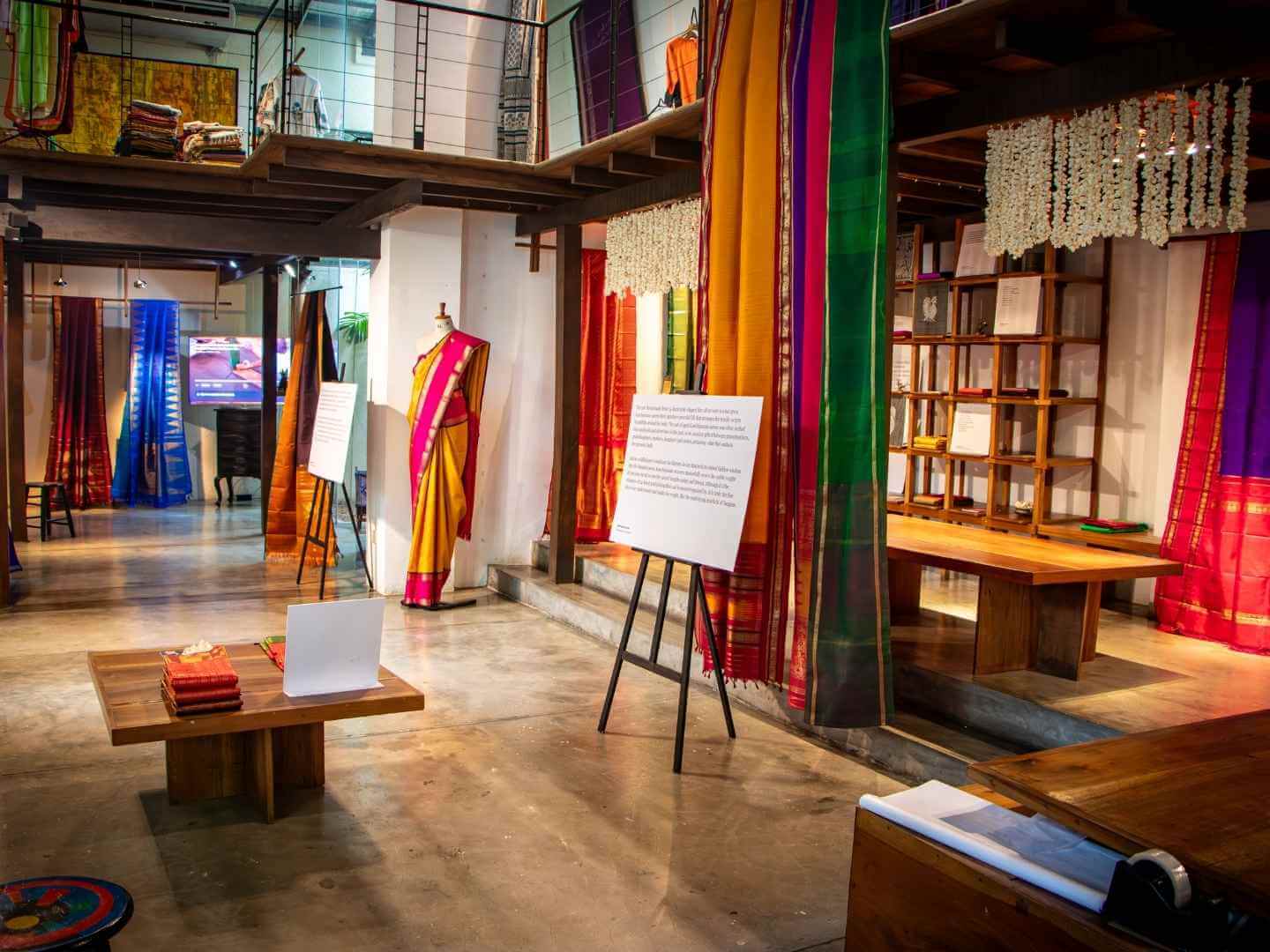
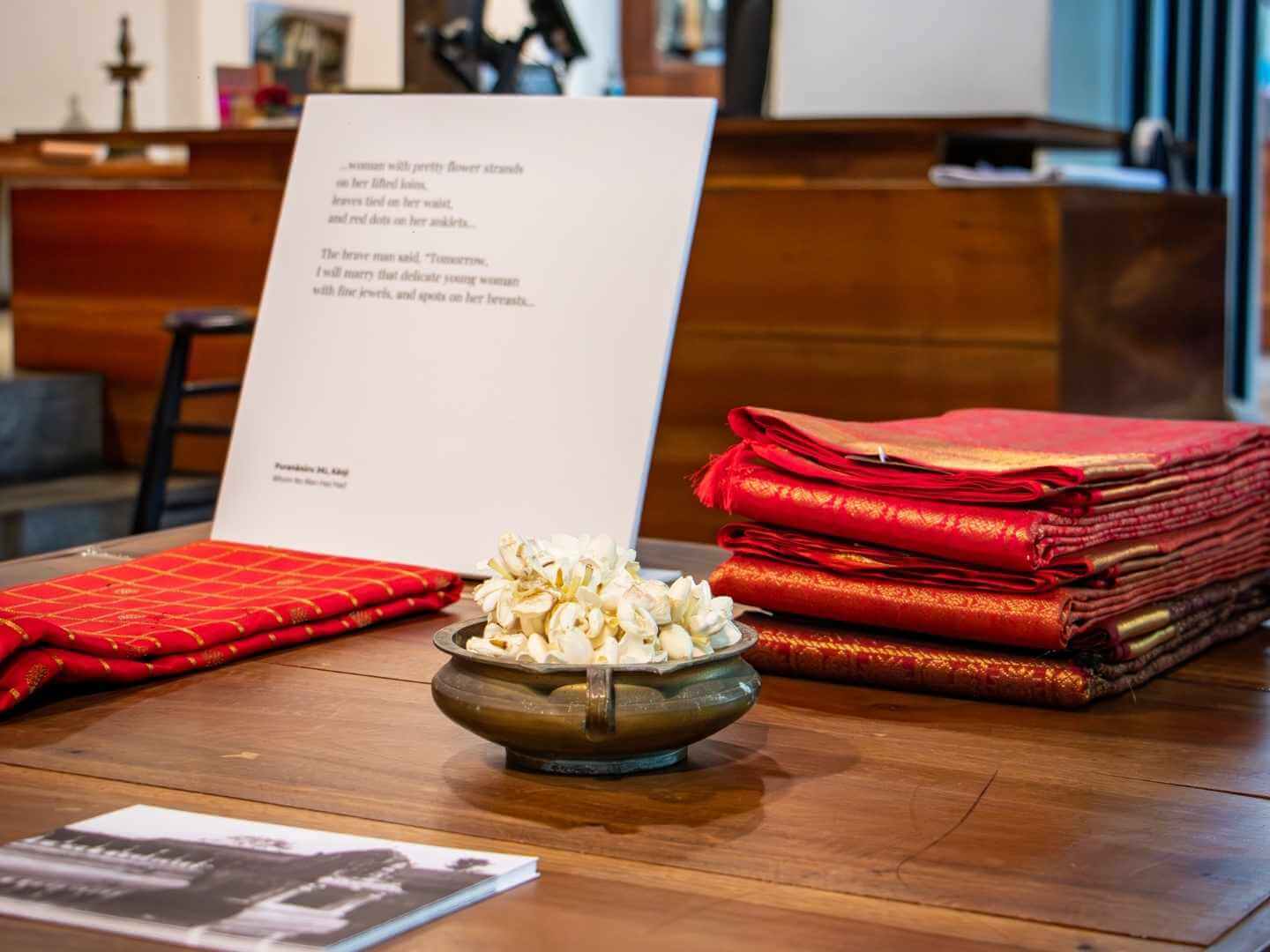
In June 2026, Rithihi presented To Wear a Poem, an exhibition that placed Kanchipuram sarees and Sangam poetry in conversation. For seventeen days, visitors stepped into a space where silk and verse were brought together, revealing unexpected parallels between one of South Asia’s most celebrated textile legacies and one of its oldest literary worlds.
At first glance, the relationship may appear unlikely. One belongs to the loom and the other to literature. Yet both are traditions shaped through rhythm, symbolism, structure, memory, and inheritance. Both Sangam poetry and Kanchipuram sarees carry meaning through systems refined across centuries. Most strikingly, both offer us beauty beneath the periphery, stemming from material and technical refinement.
Our exhibition ‘To Wear a Poem’ emerged from this shared sensibility.
More than an unveiling of Rithihi’s collection of authentic Kanchipuram sarees, To Wear a Poem was an exploration of how a textile can be read. It proposed that the Kanchipuram saree rewards the same kind of attentive looking that great poetry does: the closer one comes to it, the more it reveals.
WHY READ A SAREE?
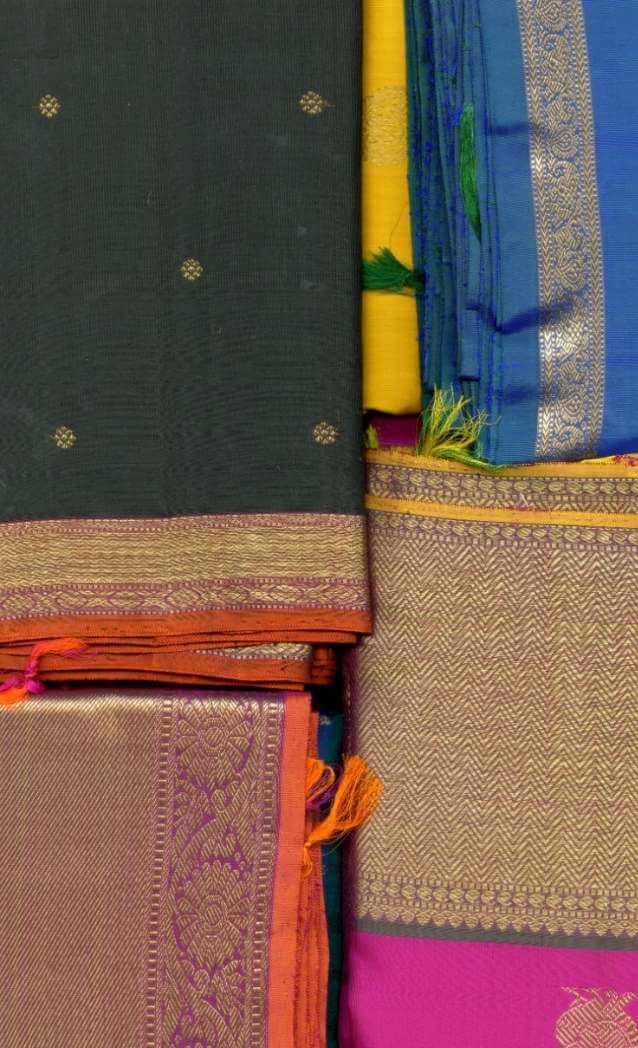
For generations, the Kanchipuram saree has occupied a singular place within the South Asian wardrobe. Distinguished by its luminous silk, graceful drape, richly woven borders, and remarkable durability, it accompanies women through weddings, religious observances, inheritances, celebrations, and acts of remembrance.
The story of these sarees is inseparable from the temple city of Kanchipuram. For centuries, weaving communities flourished there, supported by rivers that sustained textile production and by temple cultures that commissioned richly woven silk and gold-threaded offerings for the gods. Several hundred years later, these sarees continue to be woven in Kanchipuram and remain treasured heirlooms across South Asia. Their enduring significance is reflected in the Geographical Indication status that formally binds these legendary silks to their place of origin.
Kanchipuram and remain treasured heirlooms across South Asia. Their enduring significance is reflected in the Geographical Indication status that formally binds these legendary silks to their place of origin.
Yet despite their cultural prominence, much of what makes a Kanchipuram extraordinary often remains unseen. Its beauty is immediately visible. The material and technical marvel that Kanchipurams are is less so. This observation was the reason why Rithihi curated To Wear a Poem.
At Rithihi, Kanchipuram sarees have long been approached not simply as ceremonial garments, but as cultural objects shaped by generations of accumulated knowledge. To reveal that depth, the exhibition turned to Sangam poetry, one of the oldest surviving bodies of Tamil literature.
The connection was not intended as a comparison between two identical forms. Rather, it emerged from a recognition that both weaving and poetry often solve similar cultural and aesthetic questions. Both carry meaning through structure. Both conceal as much as they reveal. Both rely upon systems that become richer the more closely they are examined.
A JOURNEY
THROUGH THE EXHIBITION
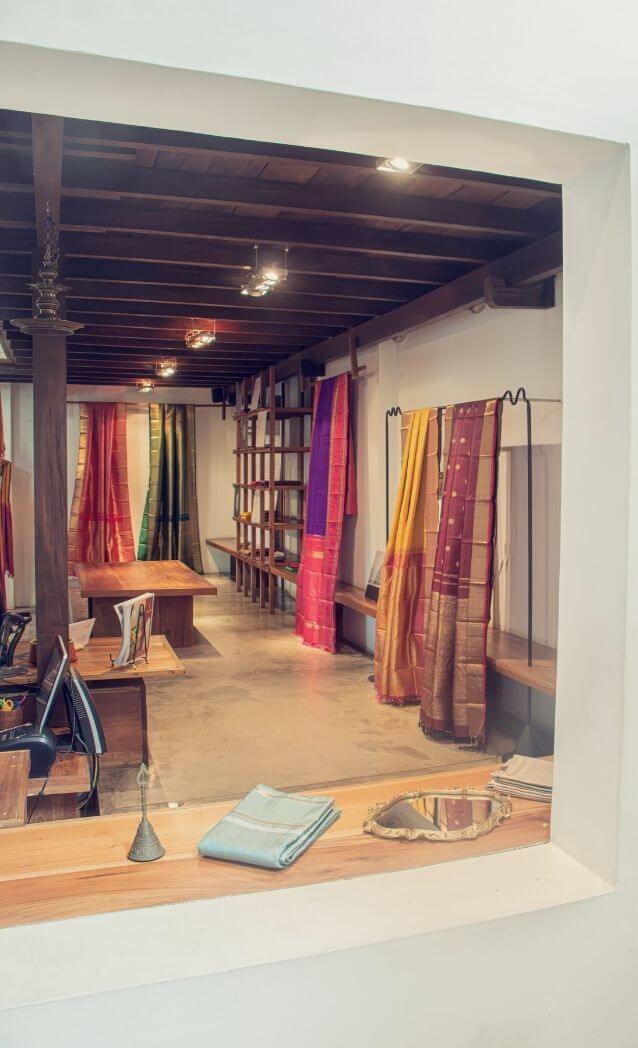
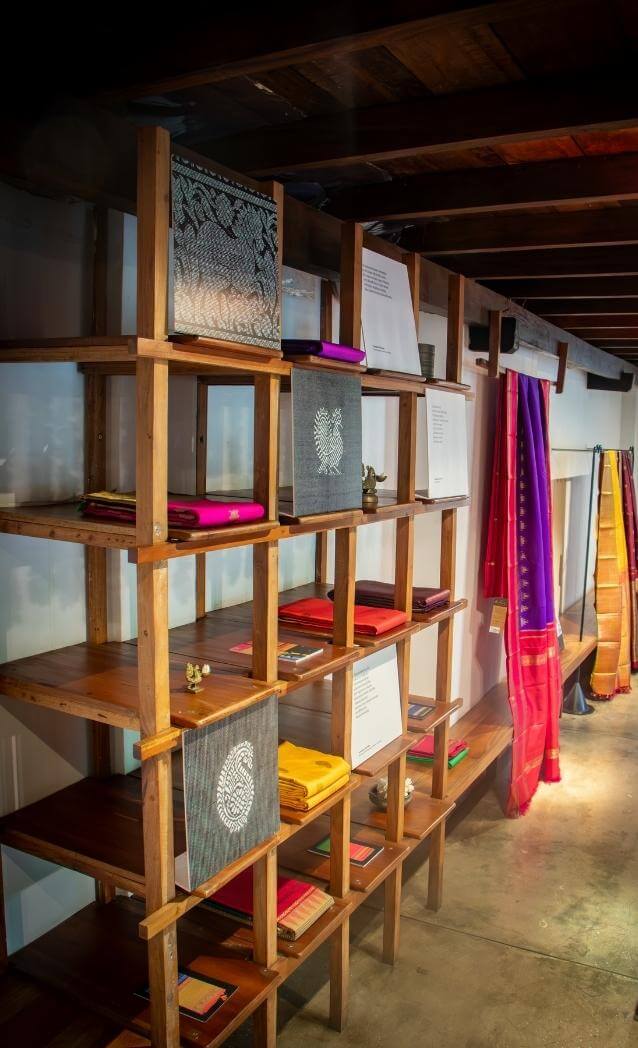
The spatial narrative of To Wear a Poem invited visitors to move through a sequence of ideas, each offering a different lens through which to encounter the Kanchipuram saree.
The journey began with akam and puram, two foundational concepts in Sangam poetry that describe the inner and outer worlds of human experience. Akam concerns intimacy, longing, interior life, and private emotion. Puram addresses ceremony, public life, honour, and collective identity.
These ideas informed two distinct curations within the exhibition itself.
The Akam curation gathered Kanchipurams intended for intimate ceremonies and quieter forms of presence. The Puram curation turned toward richer silks composed for festive occasions and public celebration. Positioned in dialogue with one another, they revealed that the Kanchipuram tradition contains both restraint and grandeur, inwardness and spectacle.
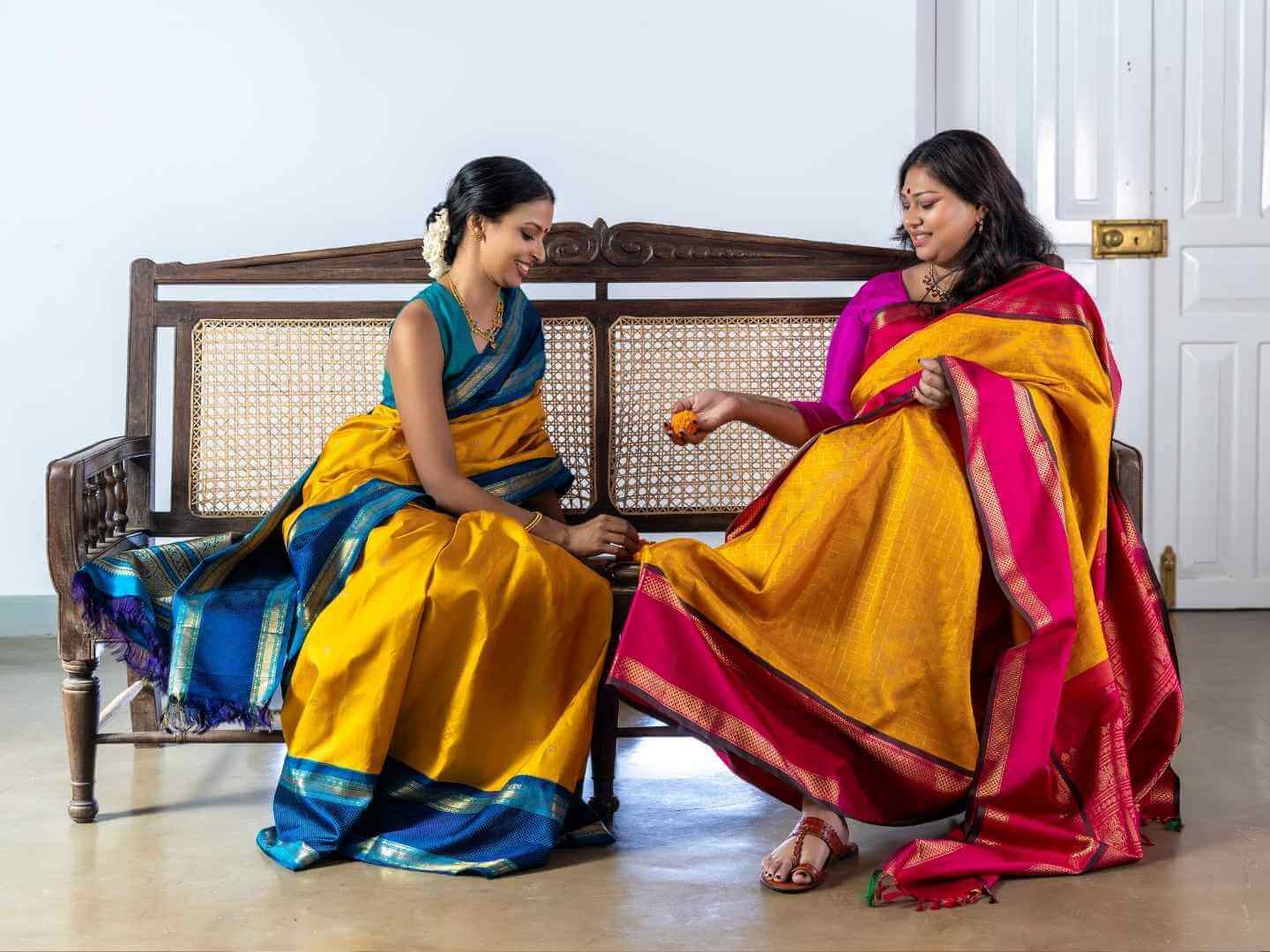
Having considered these outer and inner worlds, the exhibition then invited visitors to look beneath visible beauty and understand what makes Kanchipurams textile treasures than mere luxury sarees. The exhibition decoded this as the four elements of Kanchipuram sarees. This decoding was done by drawing parallels with similar structural elements of Sangam literature, highlighting how the craft of Kanchipurams calls for structural and creative discipline, just like other art forms. It was a deliberately created interplay to invite the viewer to give the Kanchipuram sarees the same attention they would give a work of art or a poem.
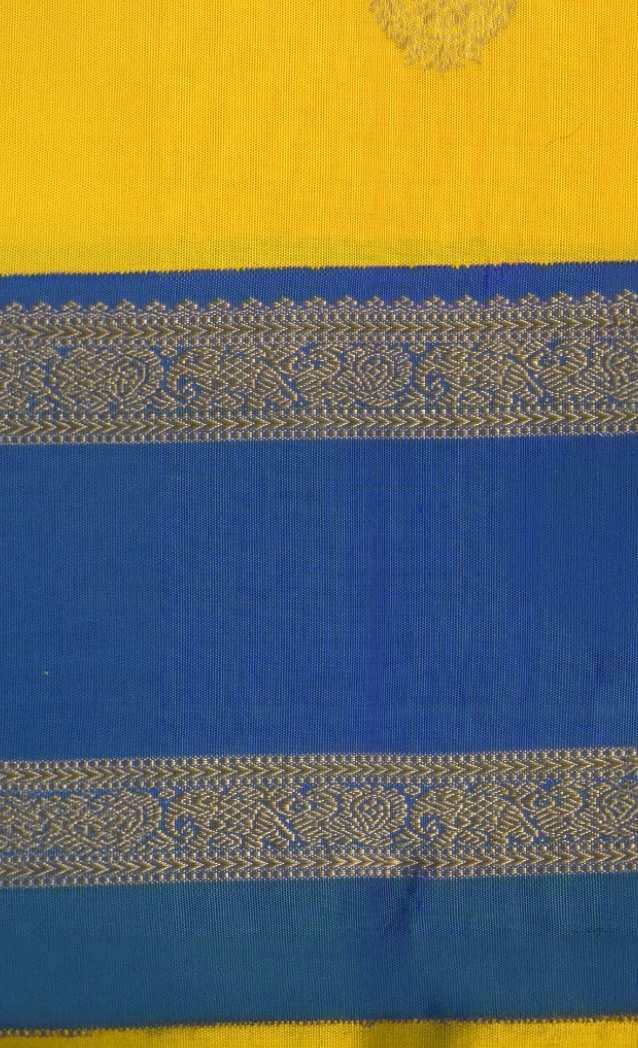
Element One: Korvai Joinery: A technique where the saree’s body and border are woven separately and joined by a loop-by-loop interlocking process. This labour-intensive method involves two artisans and three shuttles, creating an embossed ridge. It is compared to the ullurai poetic technique of juxtaposition.
Element Two: Zari Thread: Made from 24-karat gold-dipped fine silver wire, providing a graceful fall and lasting value. The silver wire provides weight, similar to the hidden wisdom of the iraichchi literary device in poetry.
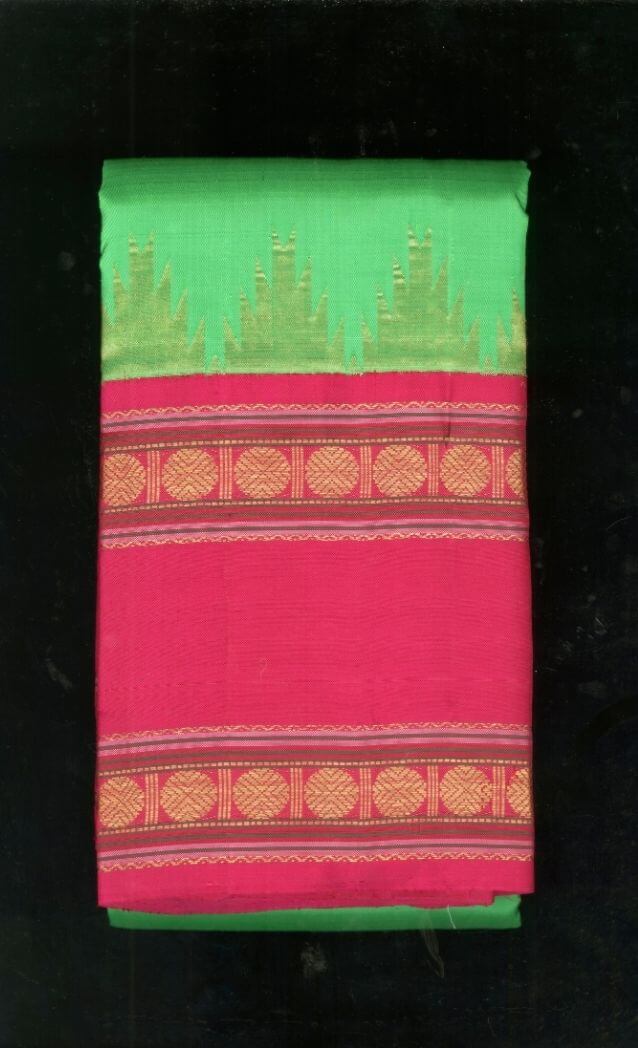
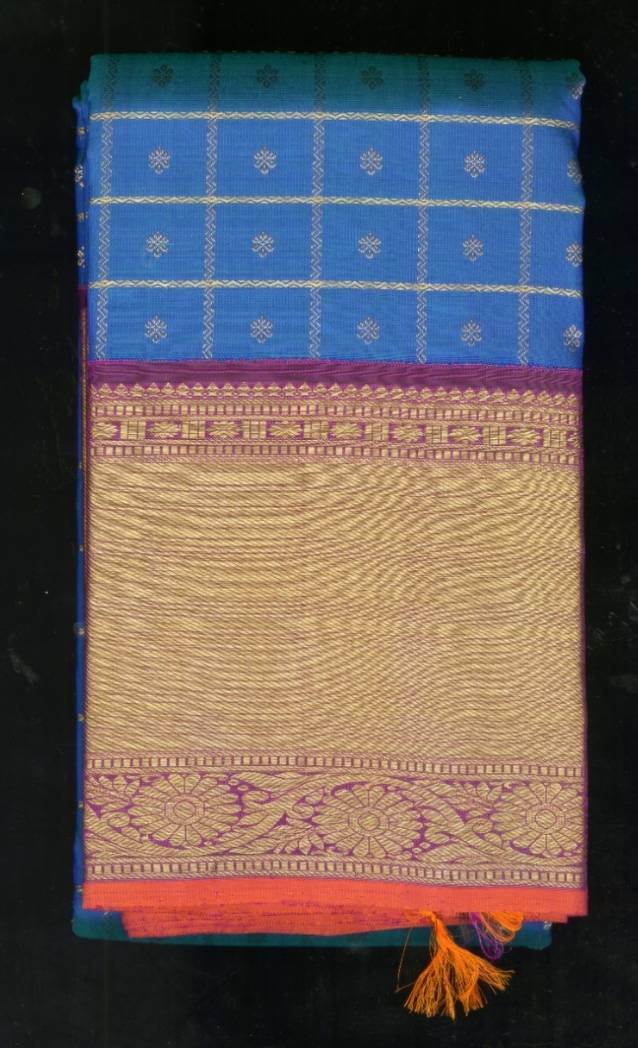
Element Three: Motif System: Rich woven motifs like the deer, half-ripe mango, or elephant are derived from natural surroundings. These function like the thinai classification system in poetry, helping match the saree to specific occasions.
Element Four: Double Warp-Weft Mulberry Silk: Uses pure mulberry silk with a double warp-double weft weave to create density, strength, and lustre. This technique is compared to the akaval (or asiryappa) poetic metre, creating an “effortless rhythm”.
Taken together, these conceptual threads formed the exhibition’s central proposition: that the Kanchipuram saree can be understood not only as attire, but as a sophisticated cultural text.
THE SAREE AS TEXT
One of the exhibition’s most rewarding insights was how naturally the language of reading began to apply to the language of weaving.
The more closely visitors looked, the more the saree revealed itself as a convergence of disciplines. The celebrated drape of a Kanchipuram is inseparable from its engineering. Its visual richness is inseparable from its symbolic vocabulary. Its longevity is inseparable from generations of accumulated skill.
Like a great poem, it can be appreciated immediately. Yet it also rewards return. Each encounter offers another layer.
AFTER THE EXHIBITION
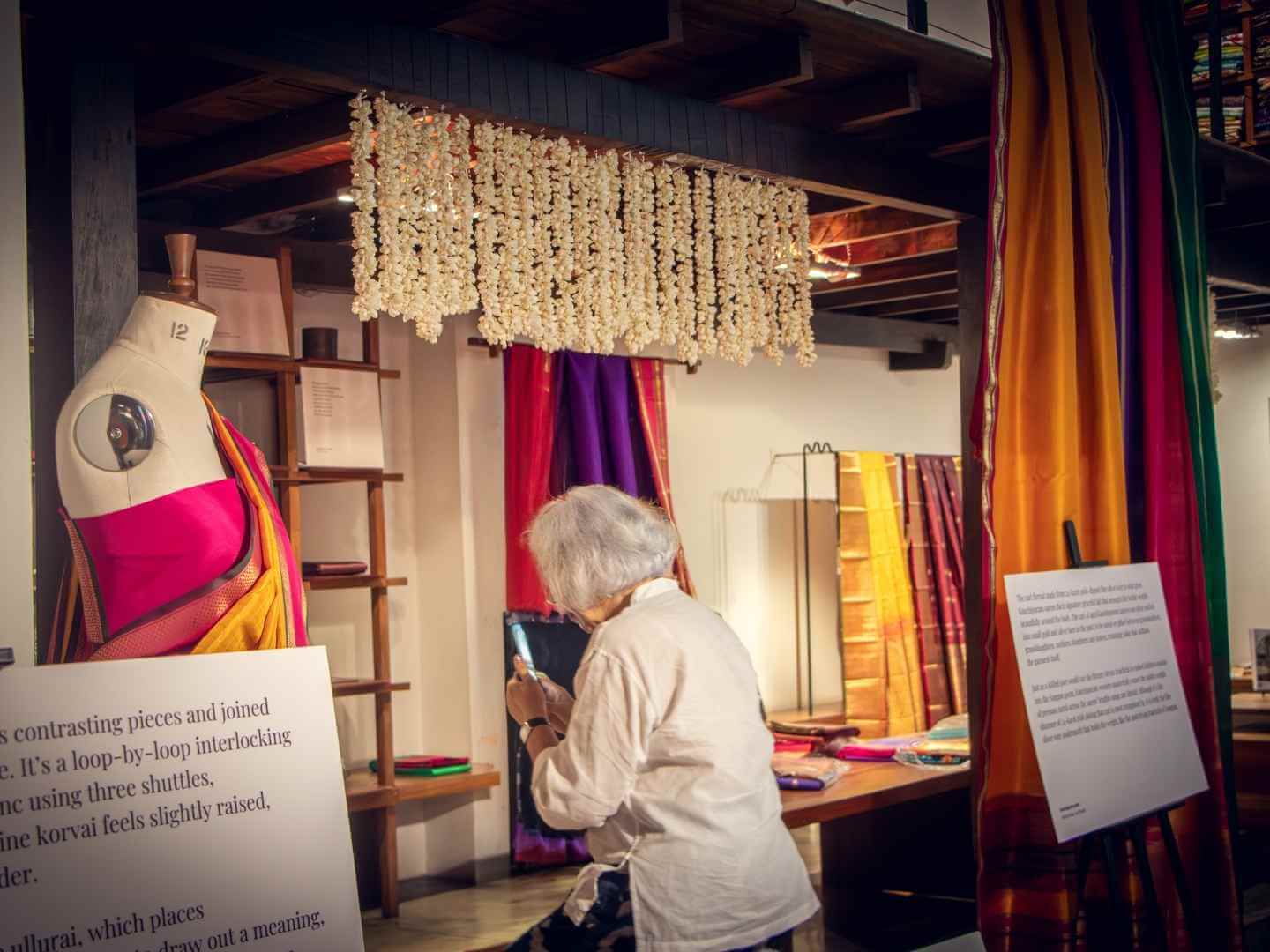
The exhibition itself occupied Rithihi’s spaces for only a brief period. The questions it raised remain.
How do we look at objects that have become familiar through repetition? What histories, philosophies, and systems of knowledge become invisible precisely because they have become part of everyday cultural life?
To Wear a Poem emerged from the belief that the Kanchipuram saree remains one of South Asia’s most remarkable achievements of hand skill and cultural imagination. In placing Kanchipuram weaving beside Sangam poetry, the exhibition suggested that both belong to a shared cultural imagination, one that has long understood that beauty becomes most enduring when structure, meaning, and emotion are woven together.
And perhaps that was the exhibition’s most enduring proposition: that a Kanchipuram saree, like a poem, is never exhausted by a single reading. It asks us to return, to look again, and to discover meanings that reveal themselves slowly, over time.
Although the exhibition has concluded, the authentic Kanchipuram retail collection at Rithihi remains for Colombo’s textile and saree lovers.
Get in touch with us!
Monday – Saturday | Hours 10:00 am – 06:00 pm
19 Alfred House Garden Colombo 3, Sri Lanka
+94 11 2581 988 (Telephone)
+94762800220 (WhatsApp)


