
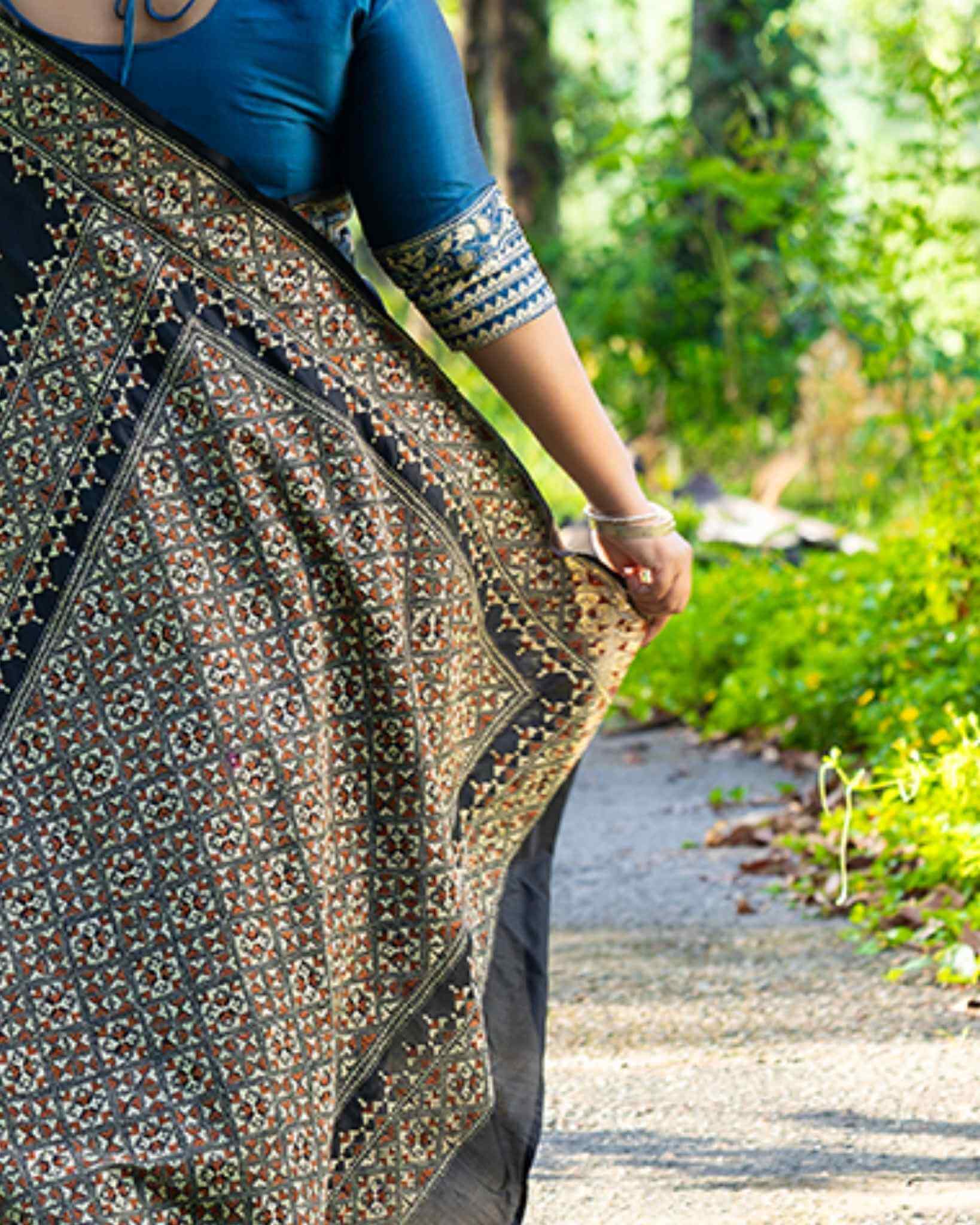
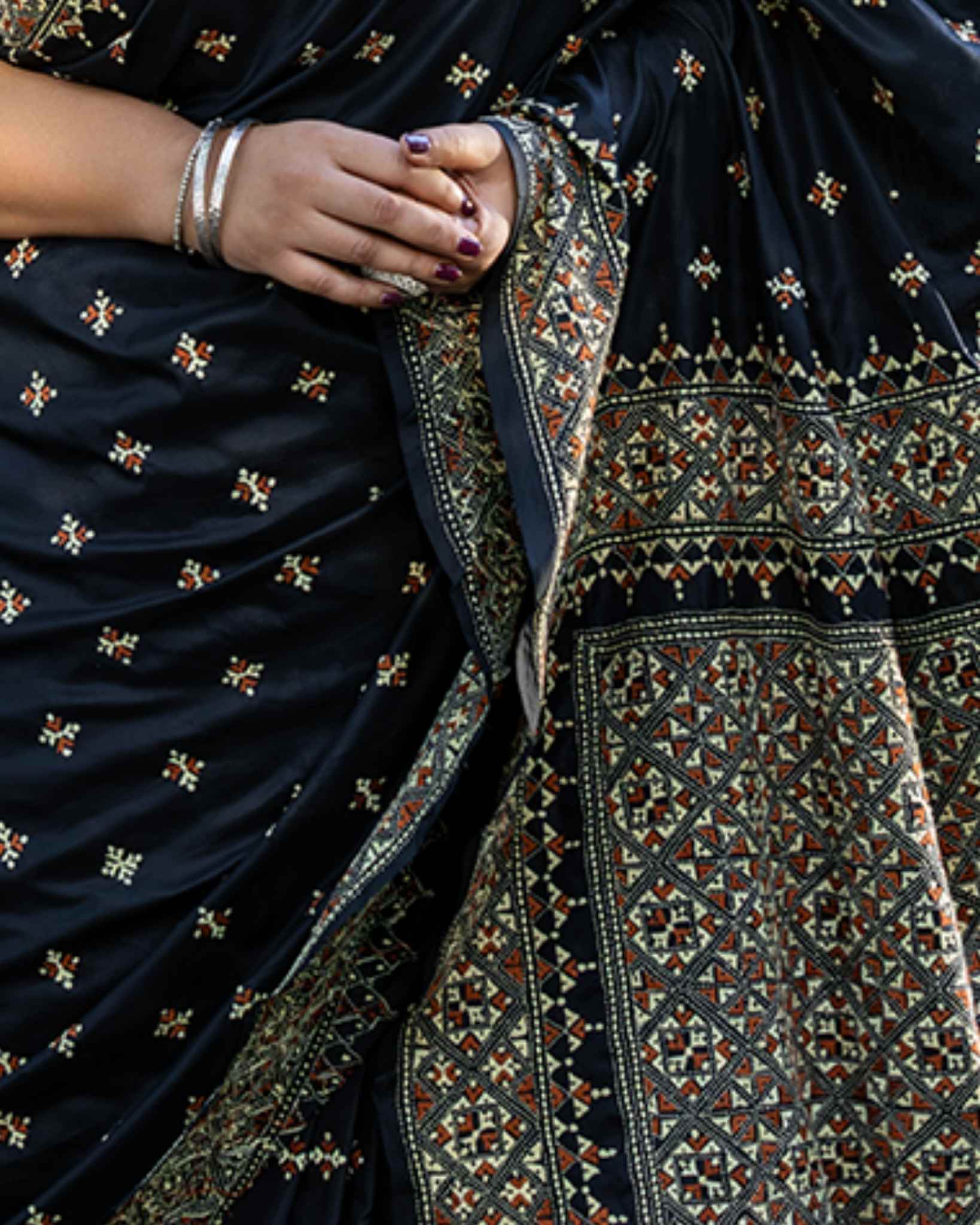
Storied motifs upon the comfort of cotton softened by time; colours so generously bold, lifted off the fabric with meticulous threadwork… kantha works carry a kind of earthborne confidence only eyes and hands untouched by ‘trends’ can muster.
Embedded in kantha is the spirit of economic and emotional resilience, which it was born out of. Aged fabric or carefully cut out pieces from a torn garment patched, layered together with embroidery, transforming hindrance into a sensory celebration of native stories, adorations and beliefs… The kantha craft, unlike stately silks and zari emblazoned counterparts, was not commissioned by the wealthy nor born in the hands of master artisans. Kantha stemmed from simple cottages, made by ordinary women. It rose amidst dire economic constraints and, in a way, a certain disregard for it. It came from people who, consciously or subconsciously, knew that lives in touch with Earth, skies, rivers, animals, fruit, and flowers were in contact with the ultimate beauty and riches; who were not tainted by the idea that simple folk were undeserving of sensory delight.
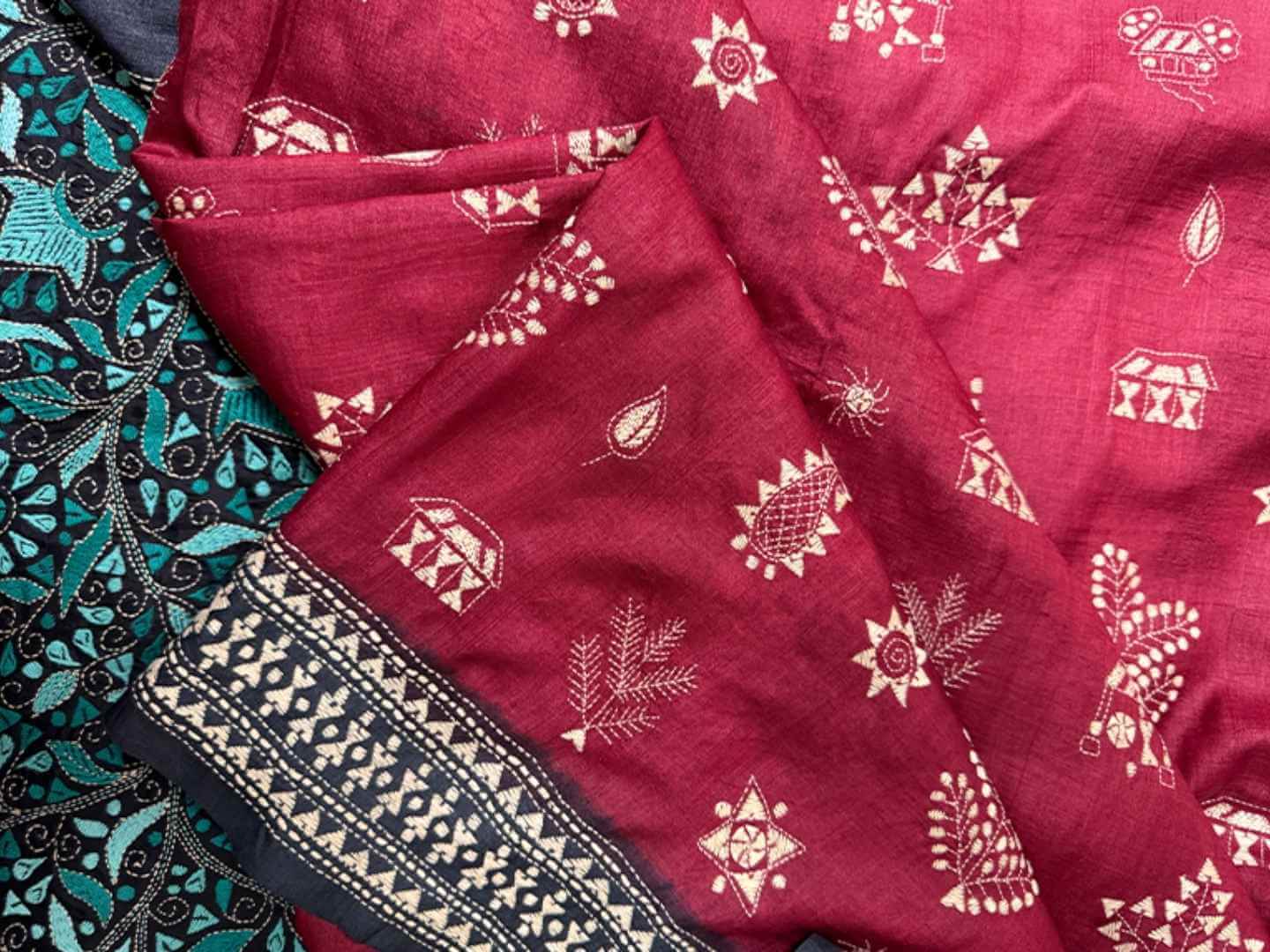
So, kantha came to be through the hands of mothers, grandmothers, wives, lovers, aunts, sisters, and cousins whose time and attention compensated in bouts, for the want of new fabric. And with nothing but the simple, commonplace running stitch, ingeniously layered and scaled, kantha became the folk craft that transformed tattered cotton into blankets, jackets, baby wraps, and prayer rugs carrying otherworldly storyscapes. Now, it’s part of Bengal and Bangladesh’s intangible heritage that holds the region together across the borders, long after the partitions. Even now, while it’s treasured in museum archives as exquisite examples of folk craft, kantha remains true to its beginnings, still made by women artisans in simple cottages and home workshops. At Rithihi, we house a beautiful collection of Bengali kantha treasures.
This Rithihi story reveals the craft, its makings and origins, so you can browse our kantha works, knowing more about its reasons, emotions and beginnings.
What kantha carries: its political, cultural, and spiritual dimensions
No kantha is merely decorative, because no kantha was ever made by someone with the luxury of mere decoration. Every motif is a choice made by a woman about what her world contained and what deserved to be remembered. The lotus, the tree of life, the fish, the sun, the moon, the kalka, these are not ornamental conventions; they are a cosmology assembled from what the maker knew, believed, feared, and loved. Hindu and Muslim women stitched the same cloth in response to their inner worlds: one pictorial and mythological, composed from scenes of a divine story; one geometric and devotional, precise and reverent. Both are profound. Both are, in the deepest sense, self-portraits of their cultures and immediate worlds. Both converged in portraying the daily life of Bengal.
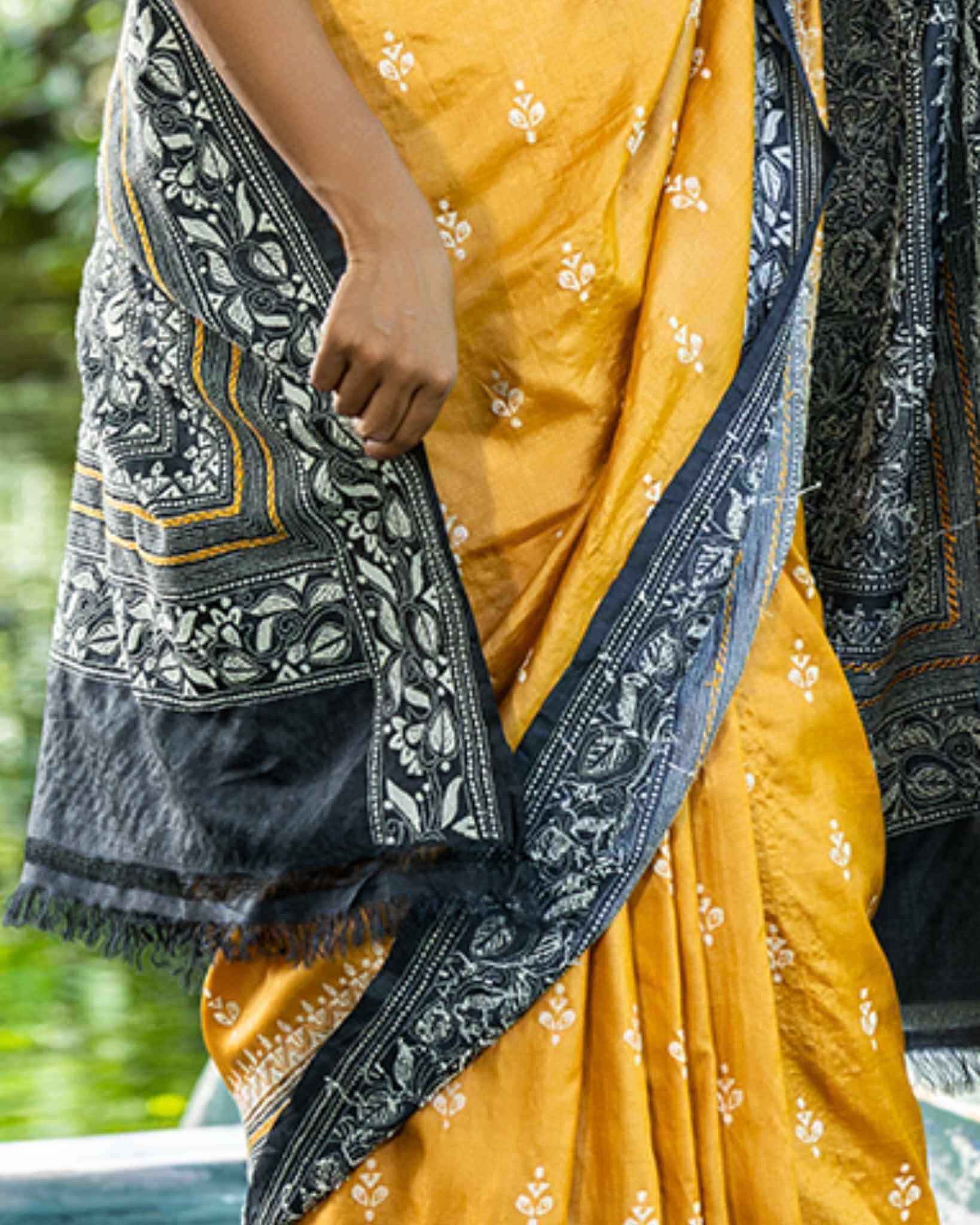
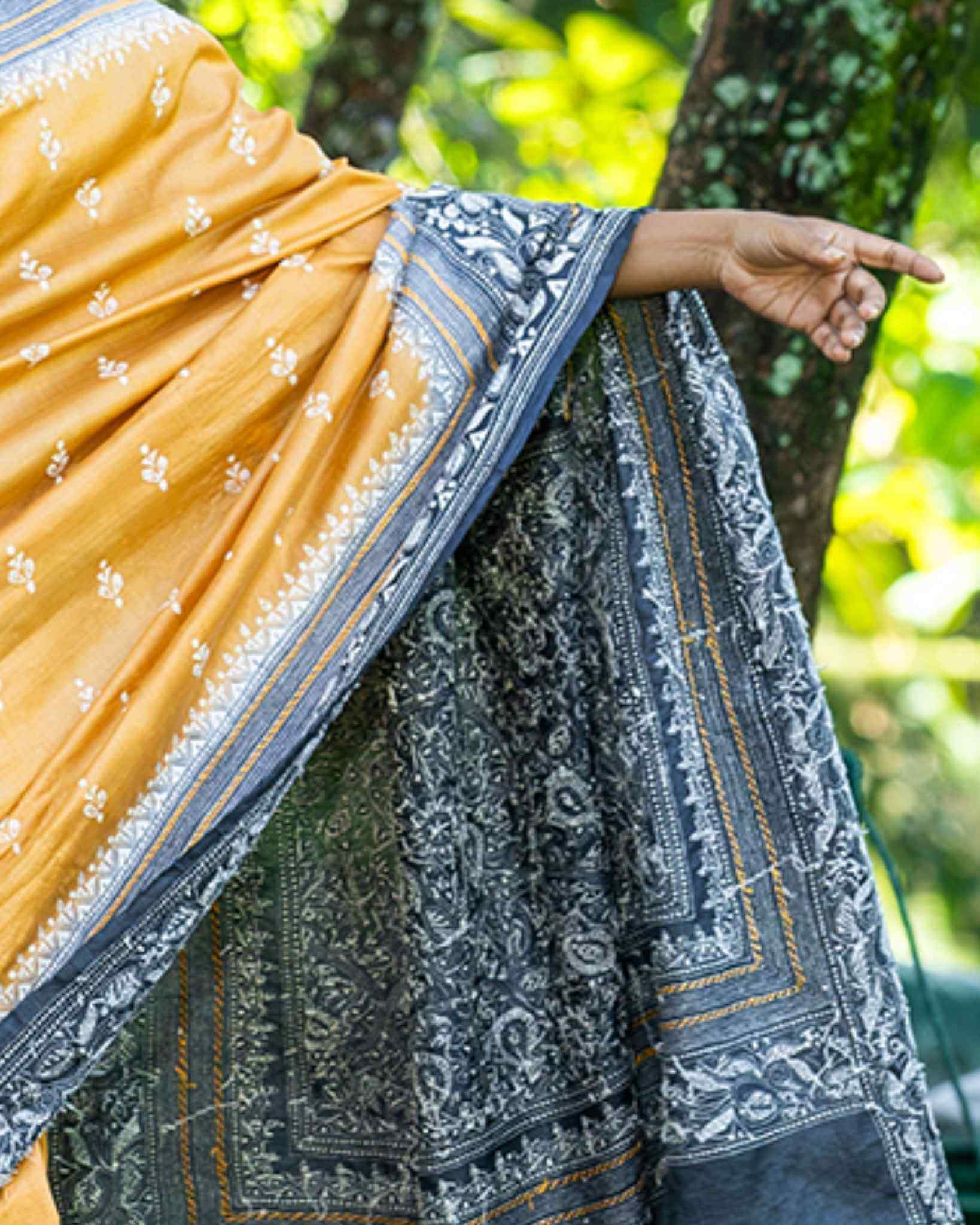
Kantha also became, in the early twentieth century, an act of deliberate political defiance. Although not given the same prominence as Khadi during the Swadeshi movement, it was among the regional crafts used as a conscious rejection of British machine-made textiles and a reclamation of identity and self-reliance, highlighted by Bengali intellectuals like Tagore and Jasimuddin. Kantha was the perfect swadeshi craft. It required no imported dyes or fabrics; it was the ultimate expression of resourcefulness. Unlike the British industrial textile system, kantha was deeply personal and rooted in folk motifs that predated colonial rule. And, it allowed rural women, who were often sidelined in political movements, to contribute to the family and national economy through home enterprises.
“Within these layers of old cloth, she stitched her joys and sorrows, turning every tattered thread into a story of beauty.” is a line from the poem ‘Nakshi kanthar Math’ (The Field of the Embroidered Quilt) by Jasimuddin. It’s a poem that immortalized kantha, telling the story of a woman embroidering a kantha quilt for her beloved, and dies waiting for him. Before her death, she asks her mother to spread the kantha over the grave, so the beloved may encounter her one way or another. That’s how personal kantha is, and that’s exactly its charm and power.
A richness that stems from simplicity
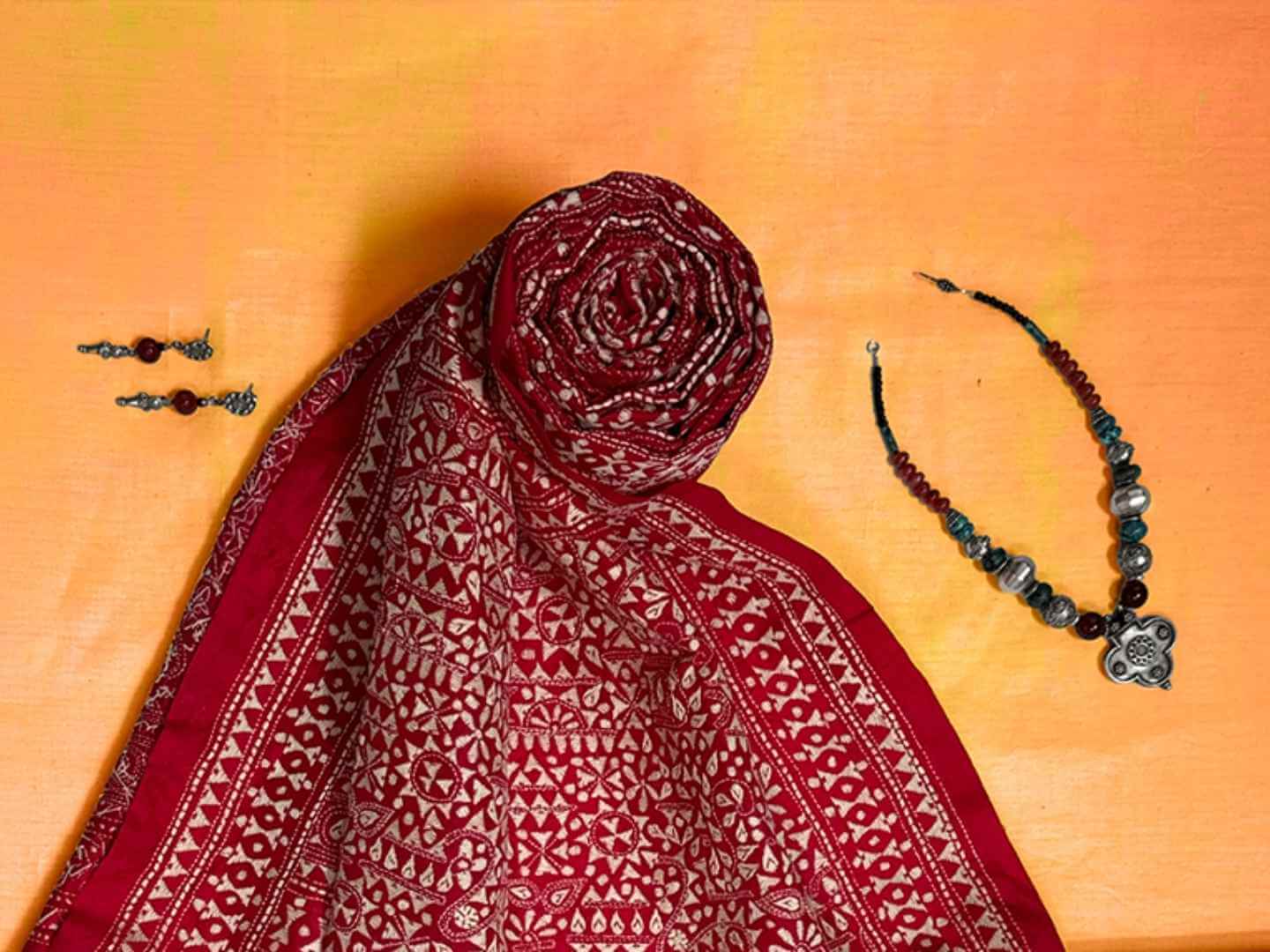
Kantha began among ordinary women with nothing to spare. The stitch itself, a simple running stitch, one of the first a child learns, is the base element of kantha. Just like a single cell that builds intricate and many-formed organisms on Earth, the simple running stitch would get cleverly layered, paced, scaled and coloured to create incredibly diverse and magical kantha pieces. The choosing of which worn saris to layer together, the instinct for how their colours and textures would speak to each other, and then, over that assembled ground, the composing of motifs drawn entirely from the maker’s own world; her beliefs, stories, devotions, and daily life. No pattern book. No formal training. Just a woman’s eye, her memory, and her sense of what mattered enough to stitch into cloth that would outlast her.
Kantha’s earliest written mention places it in a sacred exchange, a guru receiving a hand-stitched kantha from his mother, carried to him by pilgrims. Its oldest surviving pieces are in the world’s great museums. And yet it was never made for museums. It was made for sleeping under, for wrapping a newborn, for gifting at a wedding. The fact that it is now considered fine art says everything about what happens when ordinary people, with simple tools and extraordinary attention, make things deemed incredible.
What it means to wear kantha today

To wear kantha now is to wear something radical. Fast fashion has made fabric disposable, and time too expensive to spend on making. Kantha returns us to the thinking that worn cloth is worth keeping, that thread is worth unravelling and reusing, that hours of patient attention pressed into a garment make it more valuable. It’s an honest and efficient way of seeing, from long before sustainability became a buzzword. A kantha changes the way you look at cloth, labour, and time.
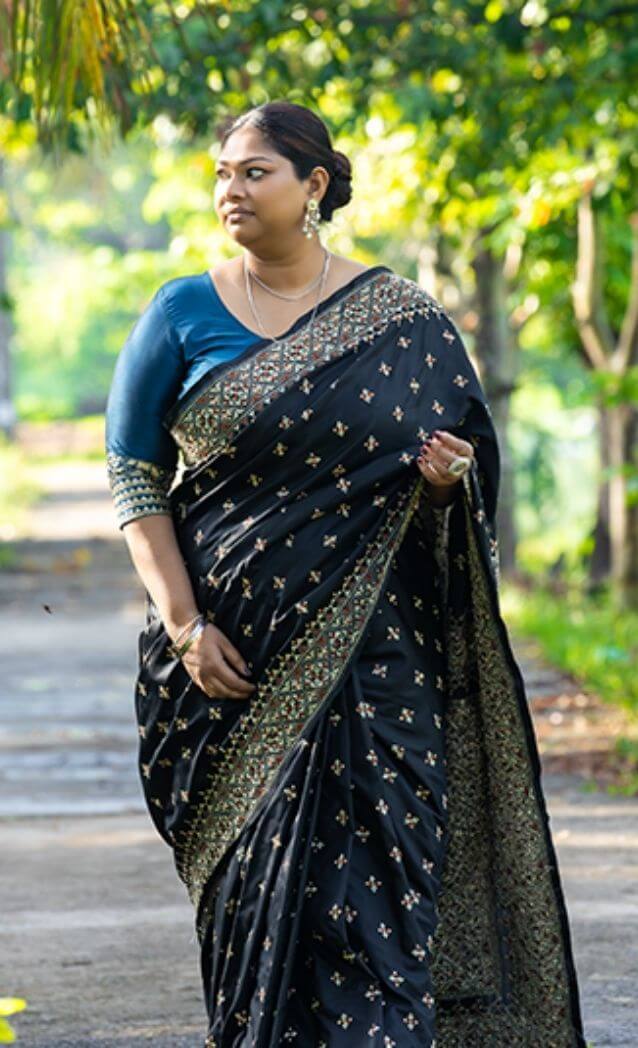
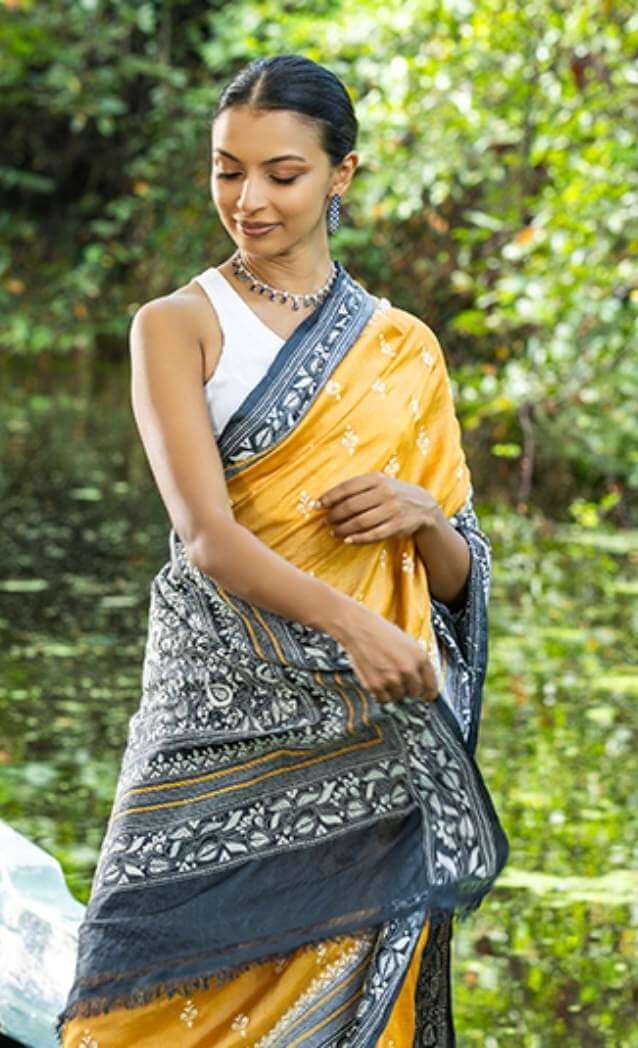
Rithihi brings genuine Bengali kantha pieces to Colombo, selected with the care and knowledge that authentic craft deserves. In choosing one, we hope you receive more than a singular, beautiful garment. We hope you receive something of kantha’s way of seeing: that nothing need be wasted; that time spent making is time honoured; that materials, cloth, thread, the labour of hands carry a value that no machine can replicate or replace. That is what Rithihi has always believed; kantha brings it into form more eloquently.
Get in touch with us!
Monday – Saturday | Hours 10:00 am – 06:00 pm
19 Alfred House Garden Colombo 3, Sri Lanka
+94 11 2581 988 (Telephone)
+94762800220 (WhatsApp)


