
A reflection for Women’s History Month, on Sri Lankan women weavers and the knowledge that lives in their hands
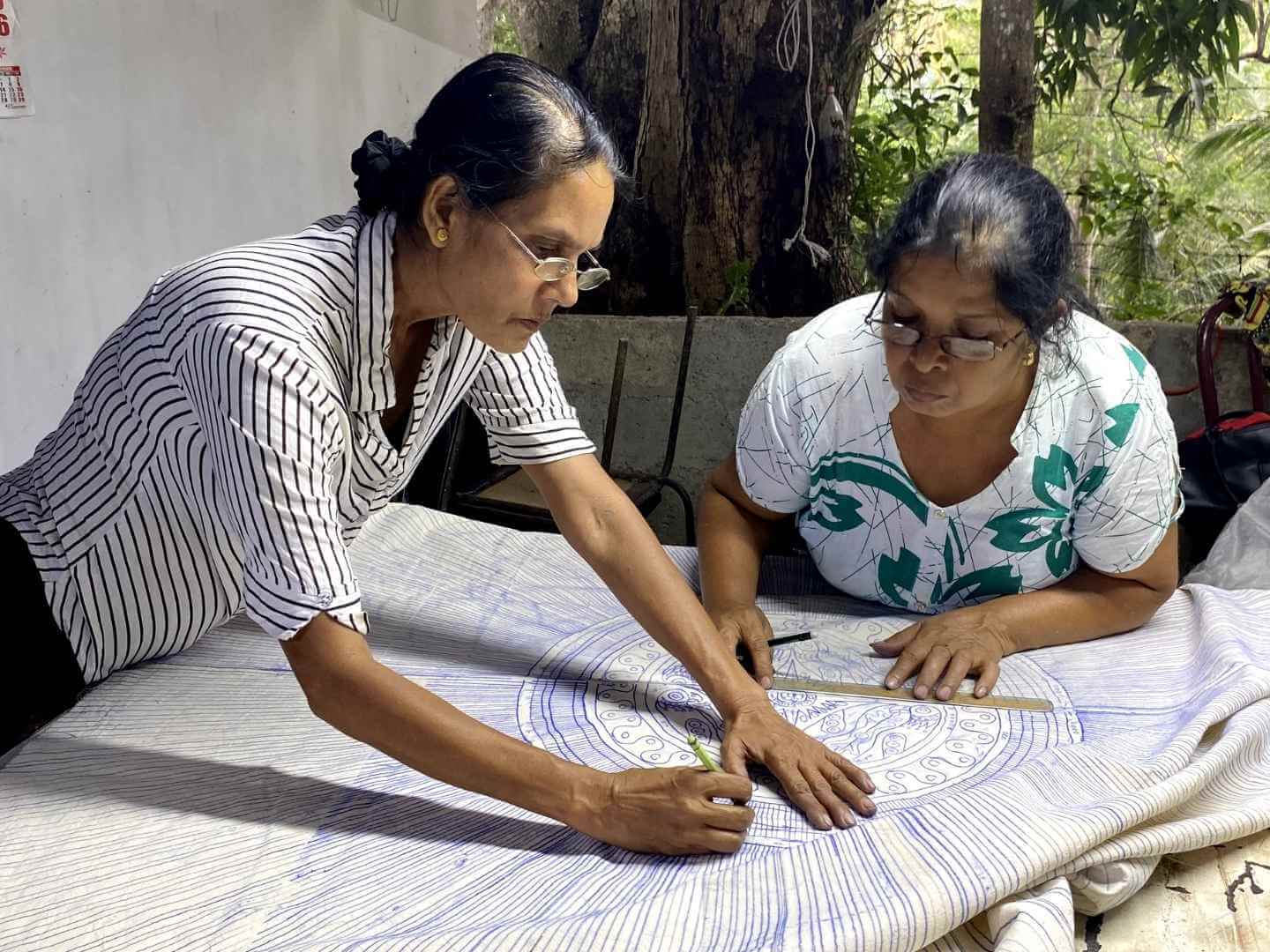
Textile making was among the first technologies women made their own. It’s not difficult to understand why. Cloth connects with the oldest acts of care; swaddling a child, binding a wound, offering a yard of warmth to elderly… Because cloth didn’t begin as tradition or art or commerce, but as care. It is the material form of the instinct to protect. And the hands weaving them were, most often, women’s.
In Sri Lanka, where we’re based, our oldest story begins with a woman at a loom. Kuweni, the contested mother of Lanka’s civilization, was spinning cotton when Vijaya arrived on this island in the sixth century BC. It’s a beginning worth sitting with. Before kingdoms, chronicles, and almost anything else we can call Sri Lankan, there was a woman making cloth on this island.
That connection never quite faded, but multiplied into homes, workshops, and cooperative rooms across this country, where women have continued to hold a major portion of Sri Lankan textile heritage in their hands.
This Women’s History Month, we wanted to look closely at this connection between women and textile making in Sri Lanka. To bring this story to you, we leaned into our close circle, Aluwihare Heritage Centre preserving Ena de Silva’s legacy of batik and embroidery and Asanga Godamune, whose handloom sarees are woven entirely by women artisans. It’s a story that taps into the realities of the incredibly knowledgeable and resilient women continuing Sri Lanka’s textile traditions.
Woman to woman, how craft lives on
Curiously, the transfer of textile craft knowledge between women has hardly ever been limited to family lines guarding trade secrets. Rather, the transmission has largely been communal, linking neighbourhood groups, organically formed craft collectives and early co-ops formed on shared needs.
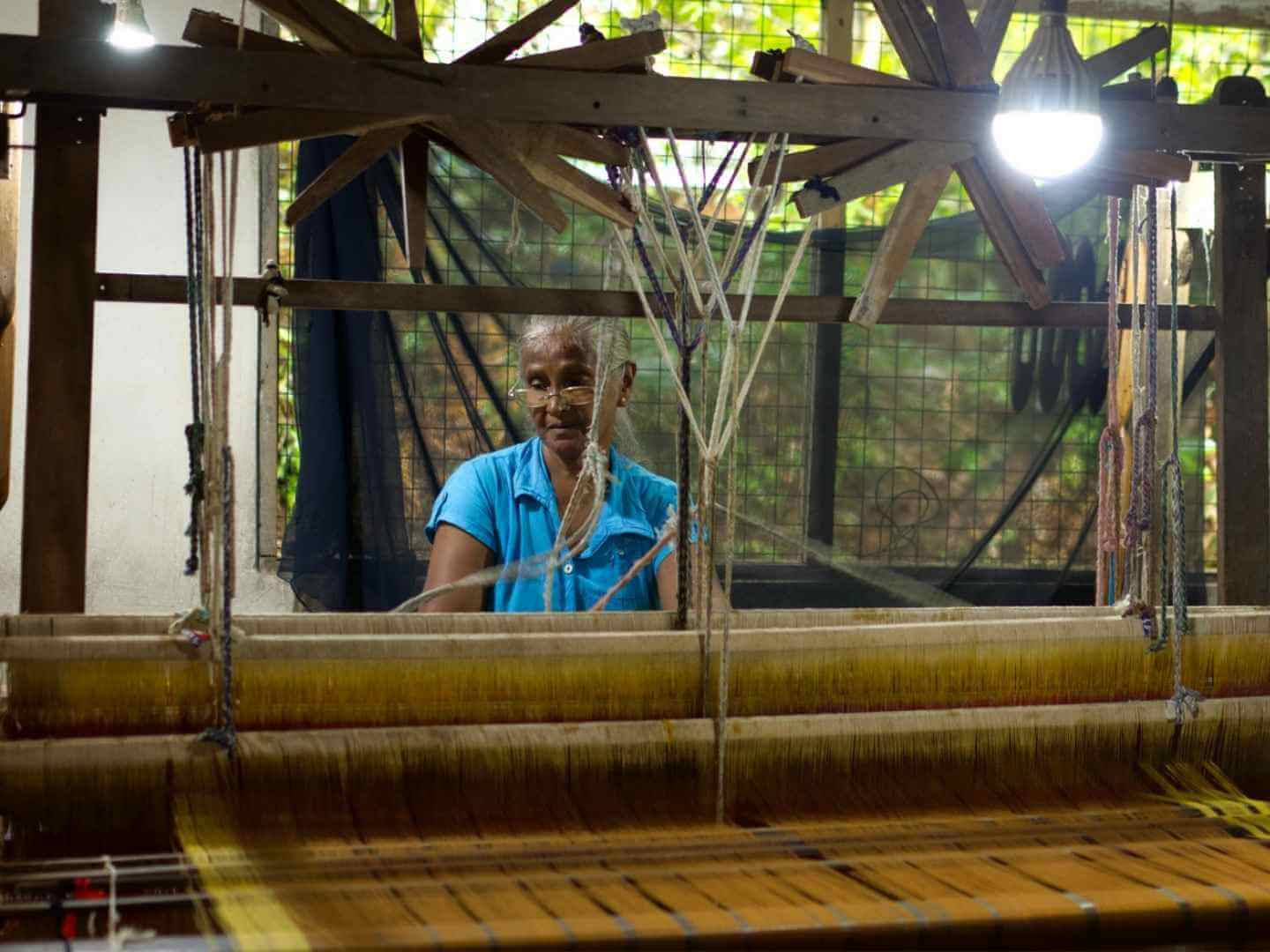
Speaking to Amila de Mel, architect and Director of the Aluwihare Heritage Centre, the artistic lineage there appears to be a rich layering of exactly these kinds of relationships. Ena de Silva’s mother is said to have taught embroidery to the community of women around their home in Aluvihare village, long before Ena’s own workshops were established. Even today, the way artisanal knowledge is transferred at Aluwihare Heritage Centre is not hereditary; it moves master to pupil, peer to peer. The Asanga handloom sarees at Rithihi are by Asanga Godamune; he commissions female artisans whose workshops echo the same pattern; colleague to colleague, teacher to student, the knowledge passing between hands that trust one another.
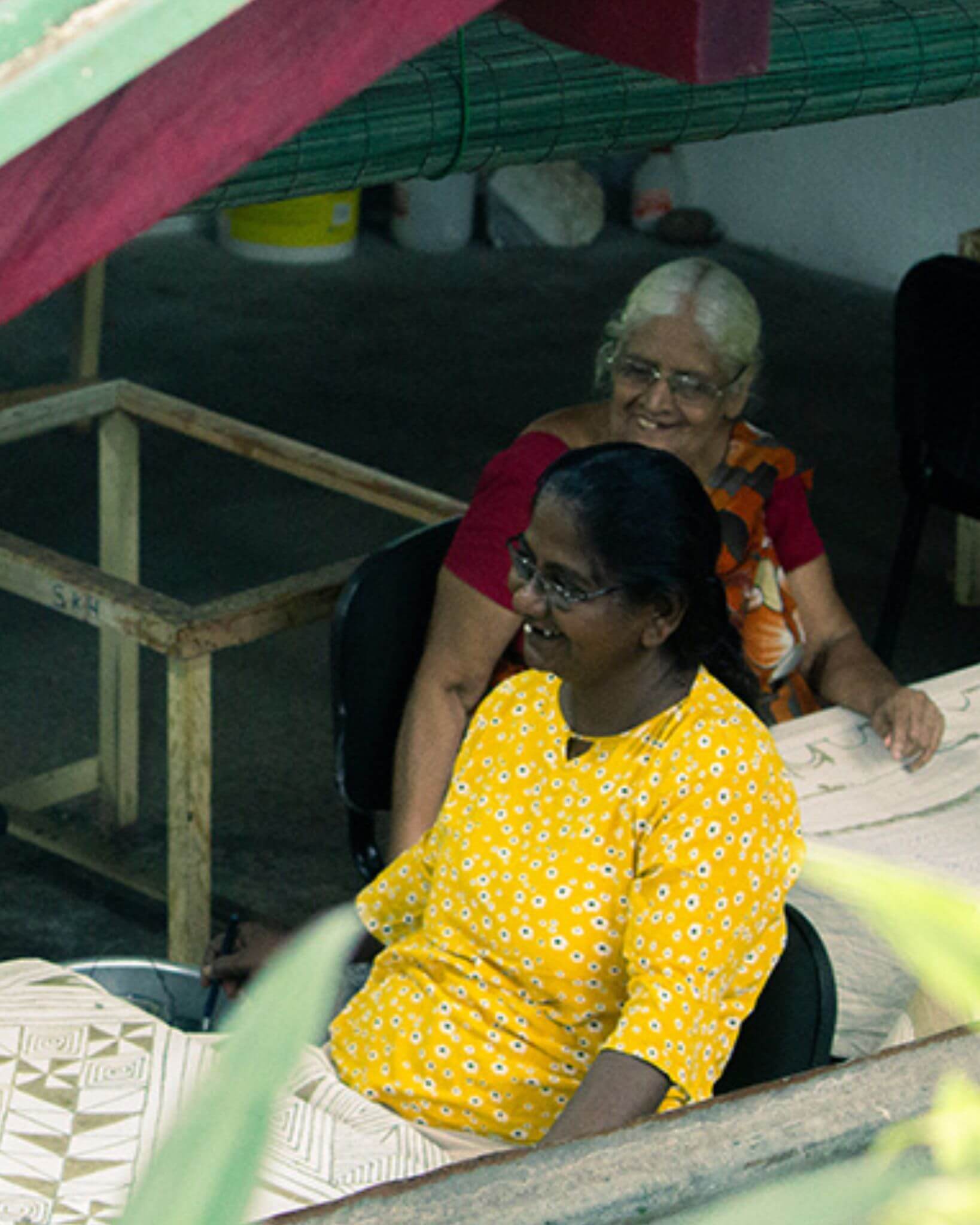
It is worth noticing the contrast with male-dominated craft traditions, particularly those with strong commercial histories, where knowledge has more often been guarded within family lines or formal guilds, held close as economic property. Women’s textile knowledge transmission evolved differently. This may be partly because for too long, women’s craft was not recognized as commercially significant. But it may equally be because the making was never only about the object; the gathering was a part of the reason for neighbours, cousins, and friends to be in the same room, in conversation, while hands were busy at work. Textile making is an infrastructure of the female community.
Knowledge too nuanced for spec sheets
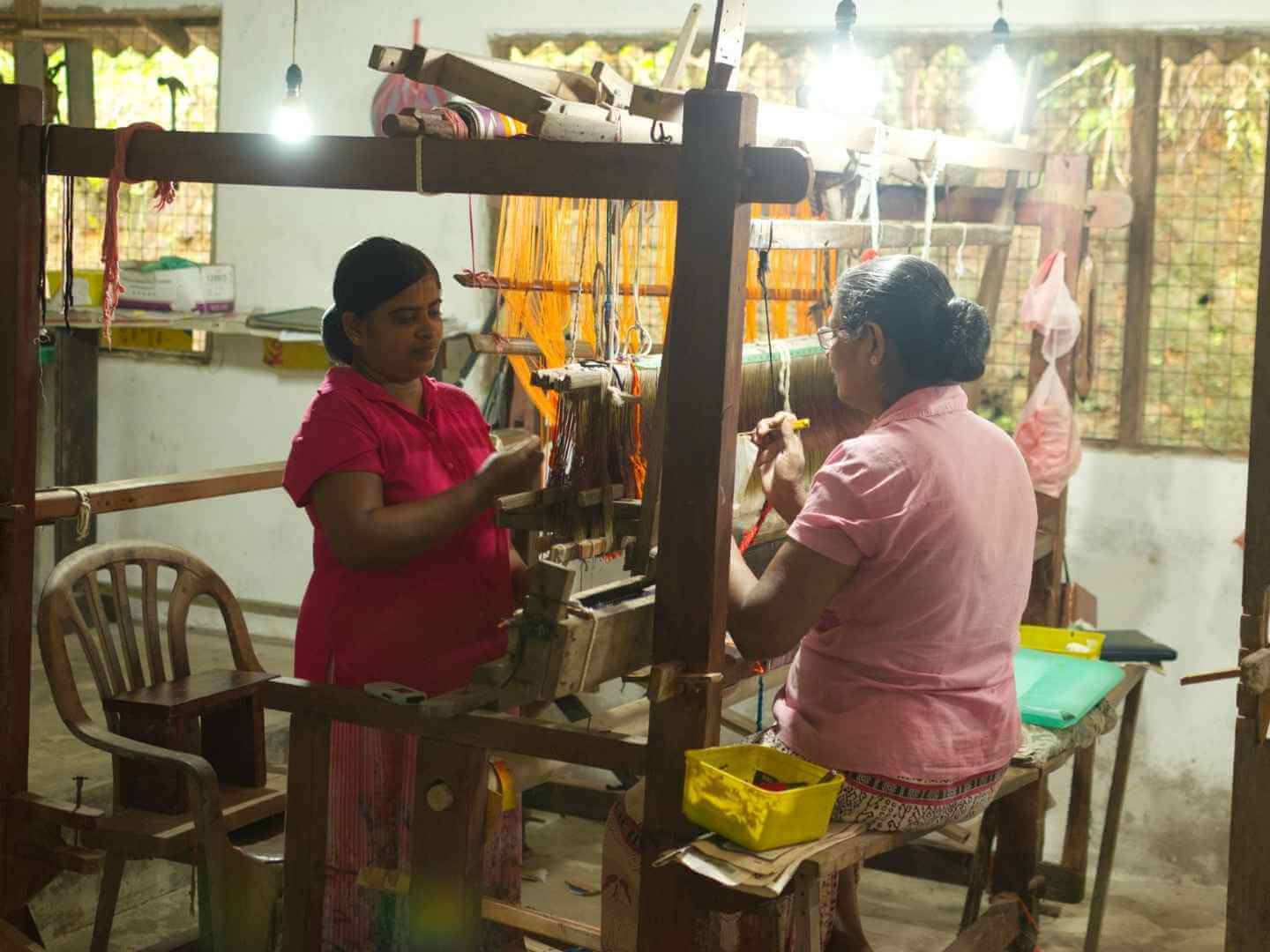
There are kinds of knowledge that can never be written down. Asanga describes how significant this type of knowledge is to textile craft. There is the tension intuition, he says; the muscle memory of exactly how much pressure to apply to the warp against the weft to achieve a specific drape, something no specification sheet can teach. There is rhythmic troubleshooting: the ability to hear a loom begin to misbehave before a thread actually snaps. And then there is the subtler literacy still understanding how the humidity of a particular day alters the tension of the thread. These are not skills that transfer through manuals or masterclasses. They transfer through proximity, through years of watching and doing, through a kind of embodied education that takes place at the loom itself over long hours.
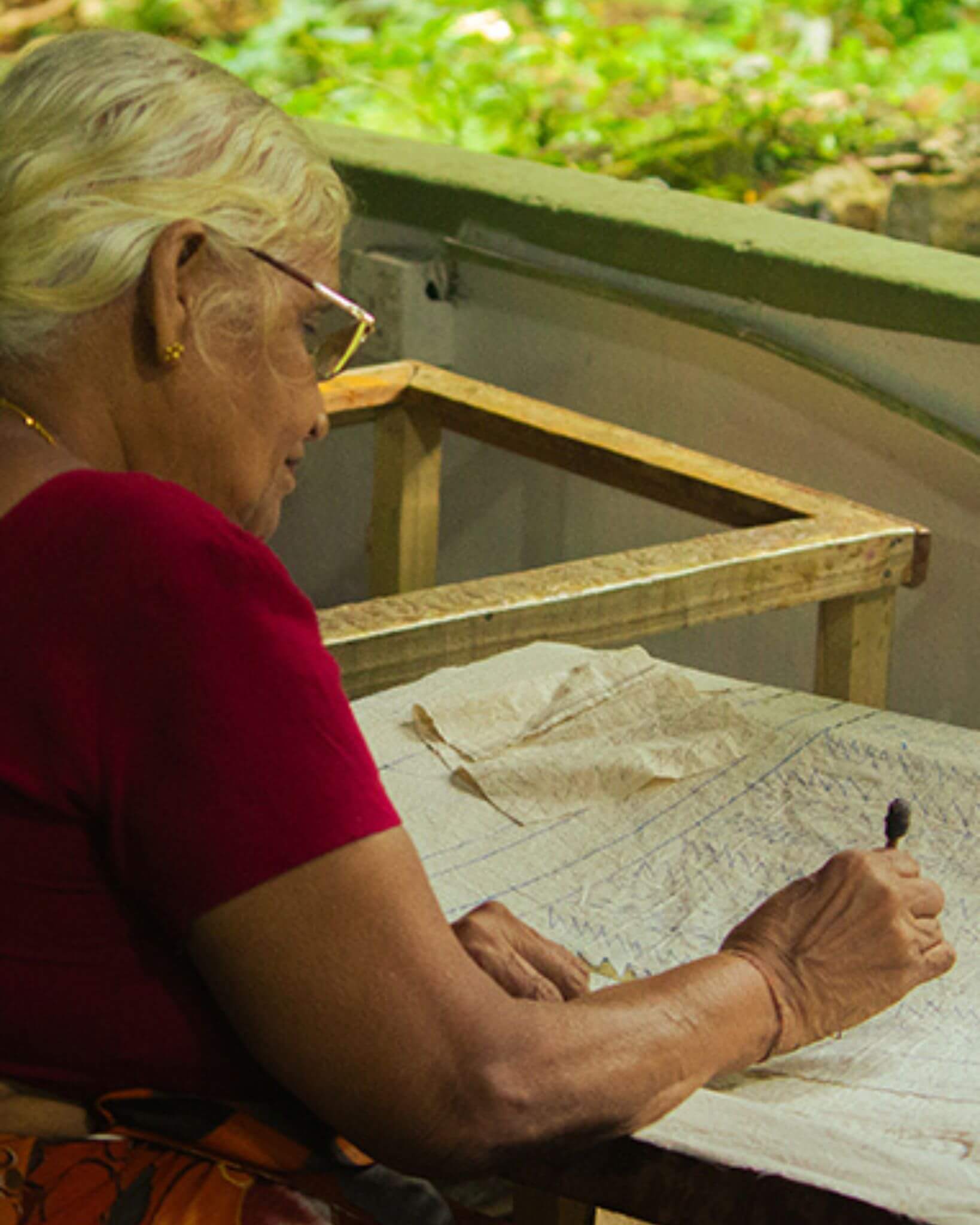
At Aluwihare Centre, some of the original artisans have worked there for sixty years. That’s an entire lifetime with the loom, batik, or embroidery; tracing, waxing, dyeing, tailoring, finishing, needlework, painting, waxing paper, assembling floral elements. Often, such a body of knowledge accumulated over a lifetime, is nearly impossible to get documented. Such knowledge can only be transmitted through close apprenticeship or years of collaboration.
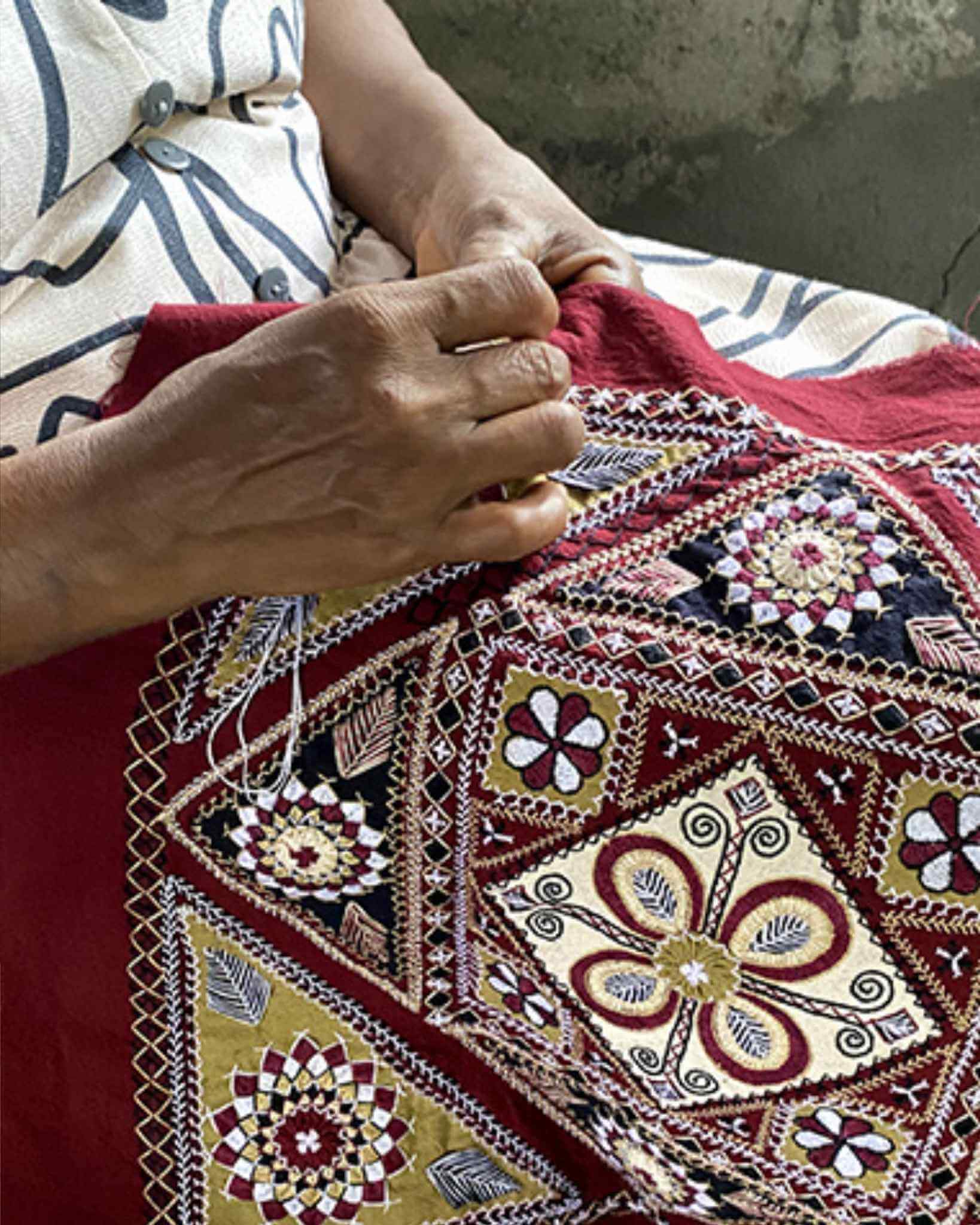
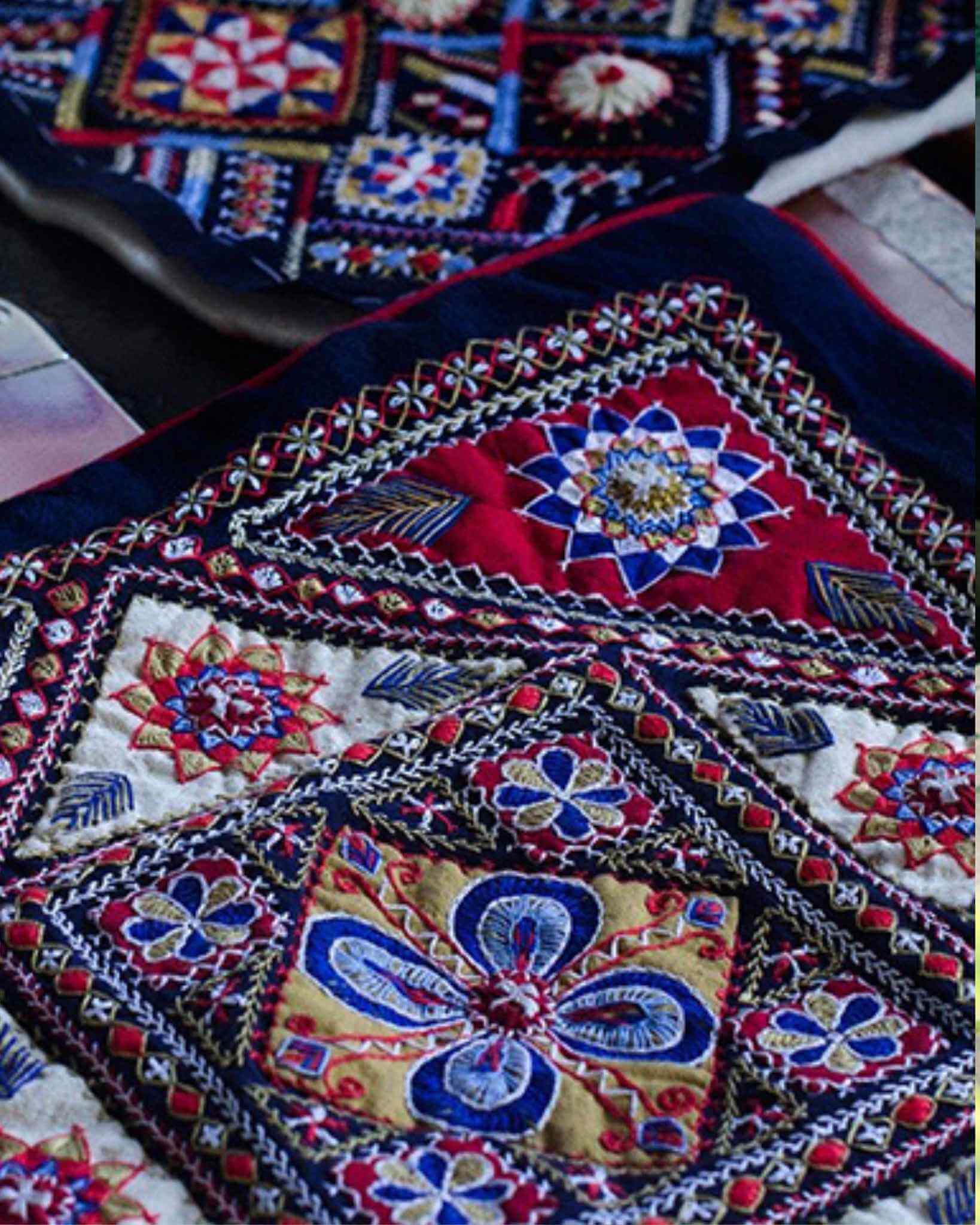
As much as this makes Lanka’s traditional textile knowledge incredibly precious, it also makes it highly vulnerable. Nuanced, layered, tactile knowledge that is very difficult to document in a spec sheet or a technical guide book, is at the risk of disappearing. Particularly because the younger counterparts, that keeps the chain alive and continuing, are becoming increasingly rare. It might sound like a cliche to mention that the younger generation is moving away from the traditional textile crafts but, it would be dishonest to share this story around the daunting fact.
Asanga says that most young women’s idea of ‘dignity of labor’ doesn’t line up with the labour-intensive practice of handmaking textiles.; add the perceived security of a garment factory wage, a steady salary, the social legibility of formal employment to the picture, and craft can barely retain a handful of young practitioners. At Aluwihare Centre, Amila observes the same current: a preference for what the younger generation considers more stable corporate frameworks. The artisan’s role, they feel, is too close to the role of the laborer. It does not look like a career.
This is not a simple problem, but it also cannot be resolved with easy sentiment. As Asanga puts it, only if young women see that they can earn a professional wage weaving high-end designer sarees rather than low-cost volume pieces, the loom can become a viable career again. The presence of an appreciative market is not peripheral consideration. They are the very things that determine whether the next generation stays, and the human-to-human transfer of knowledge can retain the craft.
The artisan is part artist; a desire for freedom is inherent in artists
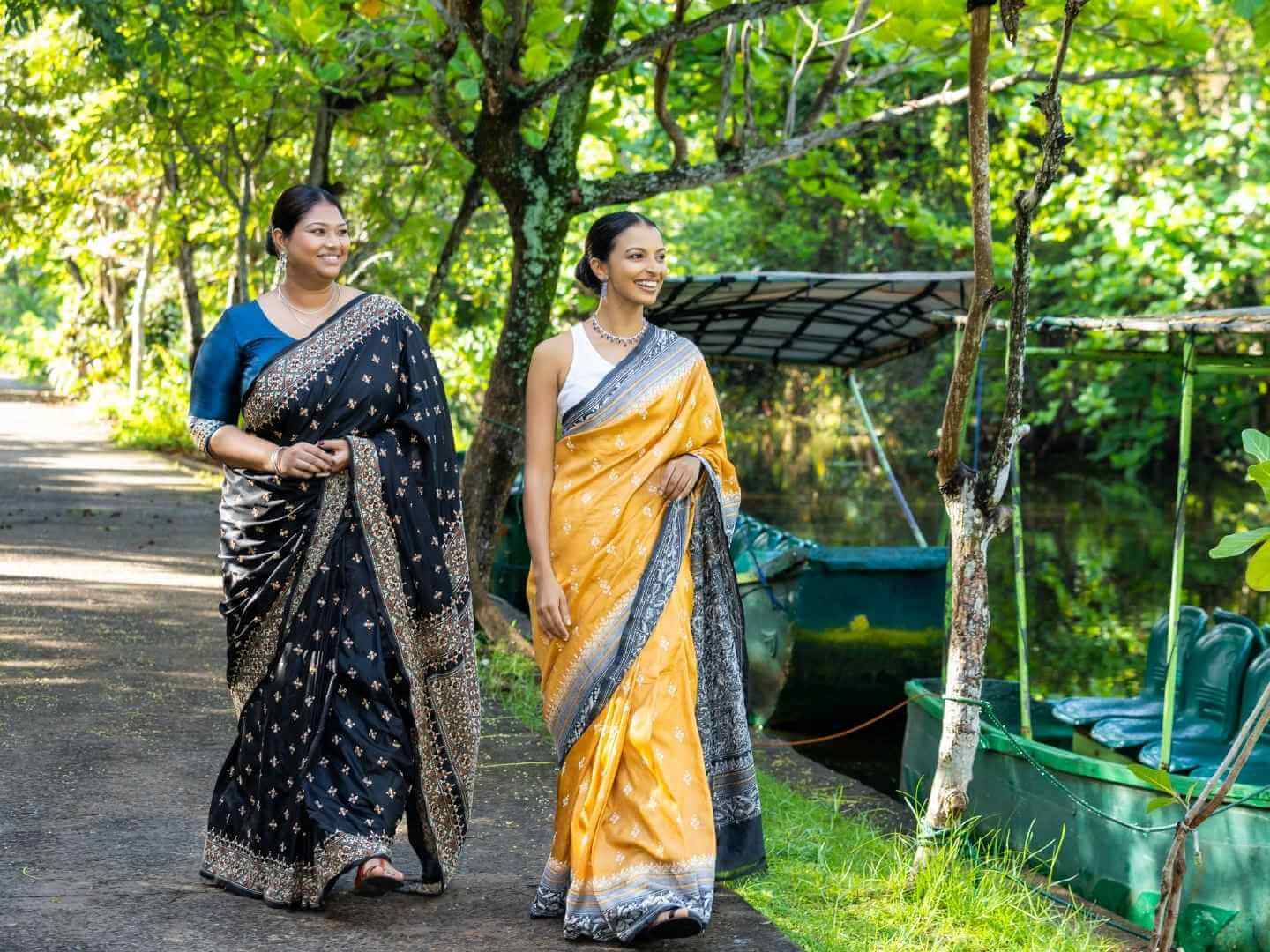
They continue not merely because of the income, Amila explains, but because the craft and the independence it gave them have become inseparable from who they are.
When we speak of women in craft, we often speak of preservation, the dutiful keeping of tradition. What these conversations revealed is something richer: the story of economic agency, of women who became, through their looms and their wax pots and their needlework, the primary breadwinners of their families.
In Asanga’s workshops, regular craft income gives women direct control over household nutrition, medical decisions, and their children’s education. Not supplementary, not incidental, direct control. Ena de Silva understood this with the clarity of a founder. Amila tells us that Ena was very particular that her artisans have their own financial autonomy, that they were able to save, to support themselves and their families. Many of those women are now widowed or single. Their financial stability, built over decades of skilled work, is what makes them secure.
There is a line Asanga offers that we find ourselves returning to, on the question of autonomy: decision-making power does not depend merely on income. It is more to do with personal attitude, education, and thinking towards community. He is right, and the truth of it is borne out in the women around him, in the ones for whom weaving is both livelihood and identity, in the ones who have simply built, over years, a kind of personhood that their beloved craft helped to shape.
A note from Rithihi, on our wonderful women who weave
Amila puts it plainly, and we think it is the most important thing in this entire conversation: when boutiques like Rithihi place importance on both the artisan and the end product, it uplifts the way artisans are viewed in society. It ascribes value to their skill, reflected in better pay and a better quality of life. When all these elements come together, it proves to the younger generation that life in the crafts is not just viable, it is profitable.
According to Asanga, consistent demand from established boutiques like Rithihi acts as a safety net. It offers higher price points and guaranteed sales, which removes the weaver’s fear of ‘dead stock’ and allows them to focus on perfecting their craft rather than worrying about daily survival.
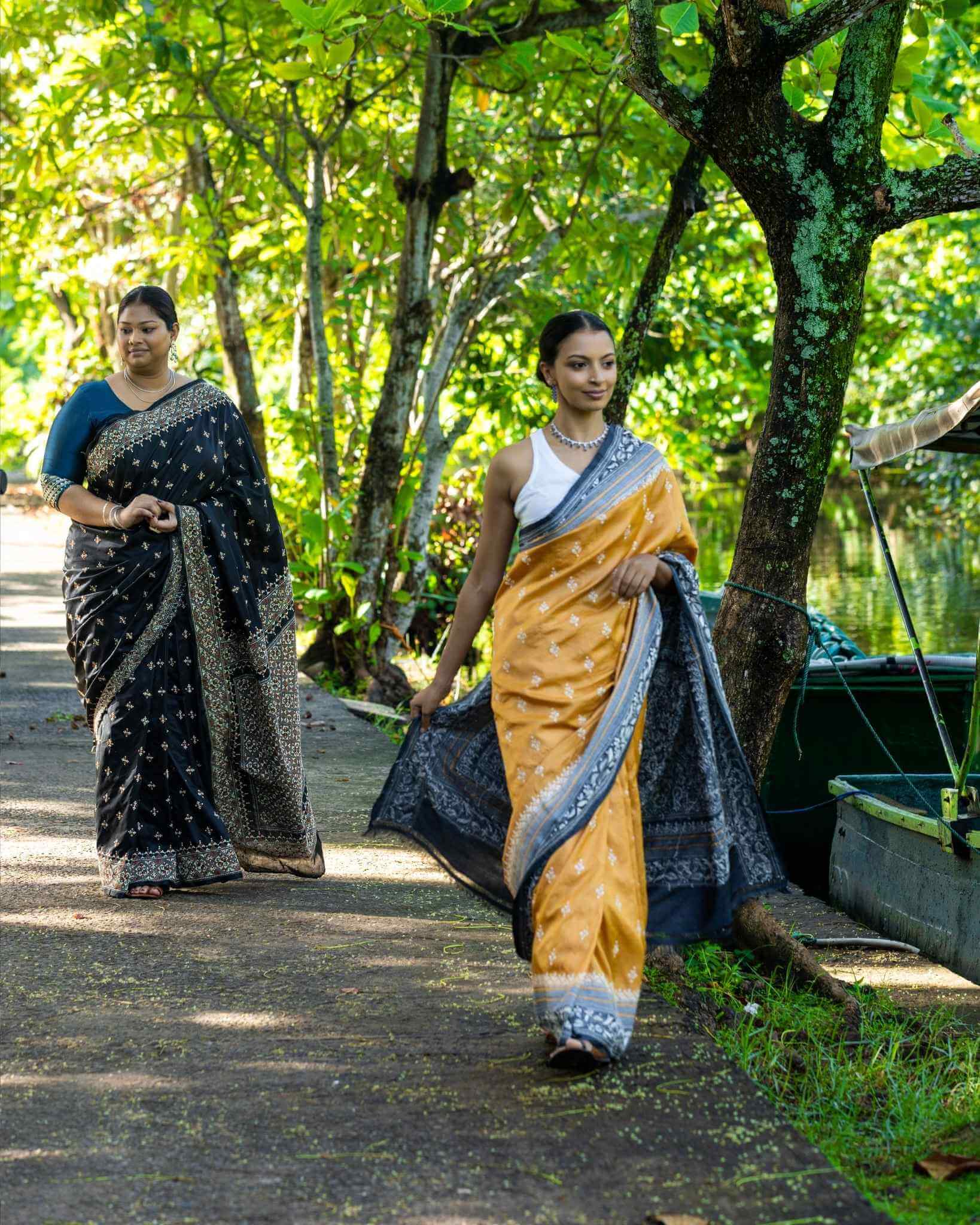
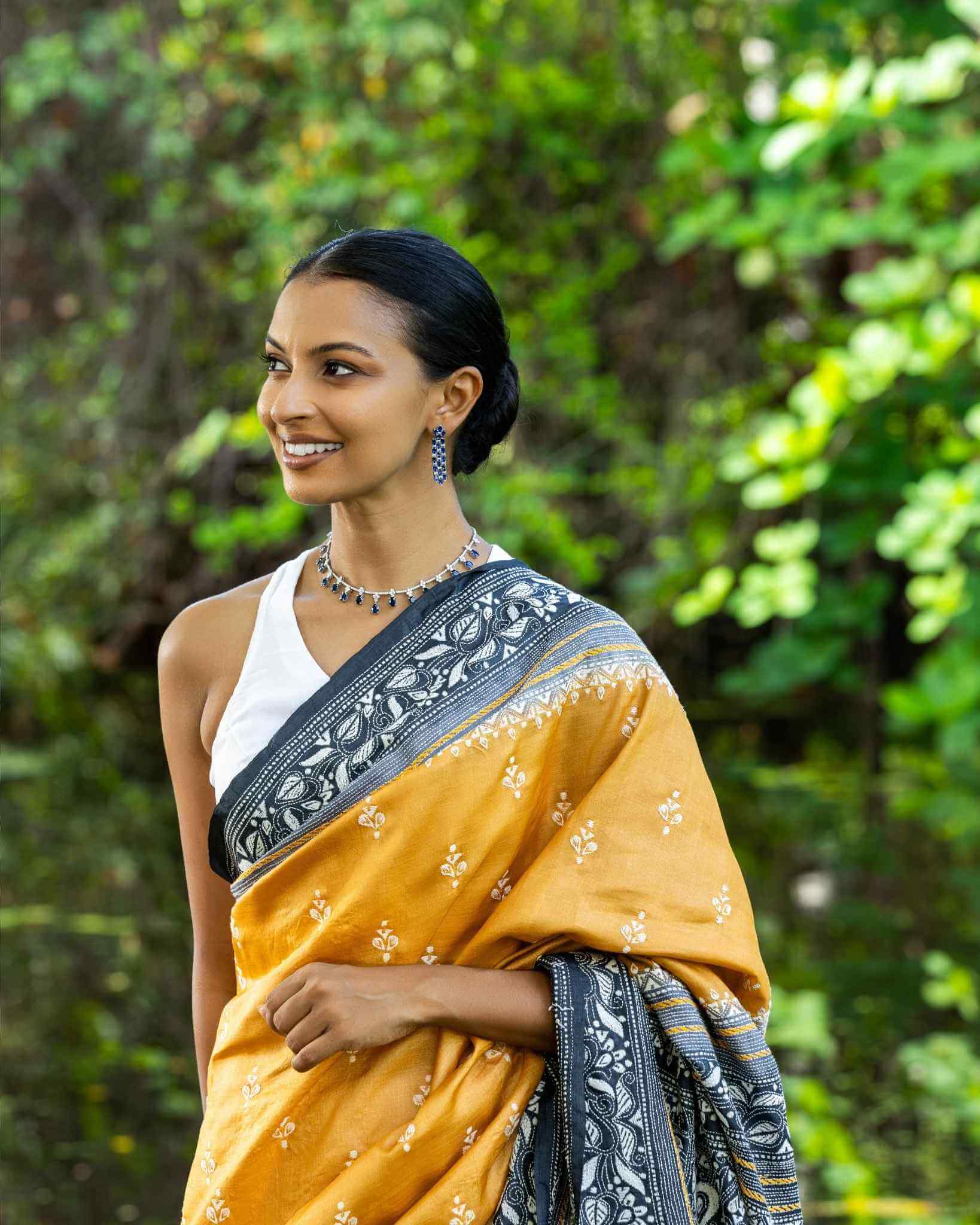
However, the twin shocks of the pandemic and Lanka’s economic meltdown have shaken this sense of security. Even with a supportive partner like Rithihi, artisans saw how quickly ‘consistent’ demand can freeze due to national lockdowns or inflation. This volatility has made them more risk-averse; they sometimes hesitate to commit to long-term, intricate projects because they fear another sudden downturn. It has taught them that while high-end demand is valuable, it is not immune to the country’s instability. Yet, they continue to weave.
Many of the sarees and textiles you find at Rithihi are made by women. Women who have carried skills across decades that no institution has formally catalogued; who chose or fought for the right to work with their hands and earn from that work. This is why we think the many women-made pieces at Rithihi are small biographies. They are stories of our women who weave; worth wearing, collecting, and knowing.
Get in touch with us!
Monday – Saturday | Hours 10:00 am – 06:00 pm
19 Alfred House Garden Colombo 3, Sri Lanka
+94 11 2581 988 (Telephone)
+94762800220 (WhatsApp)


