
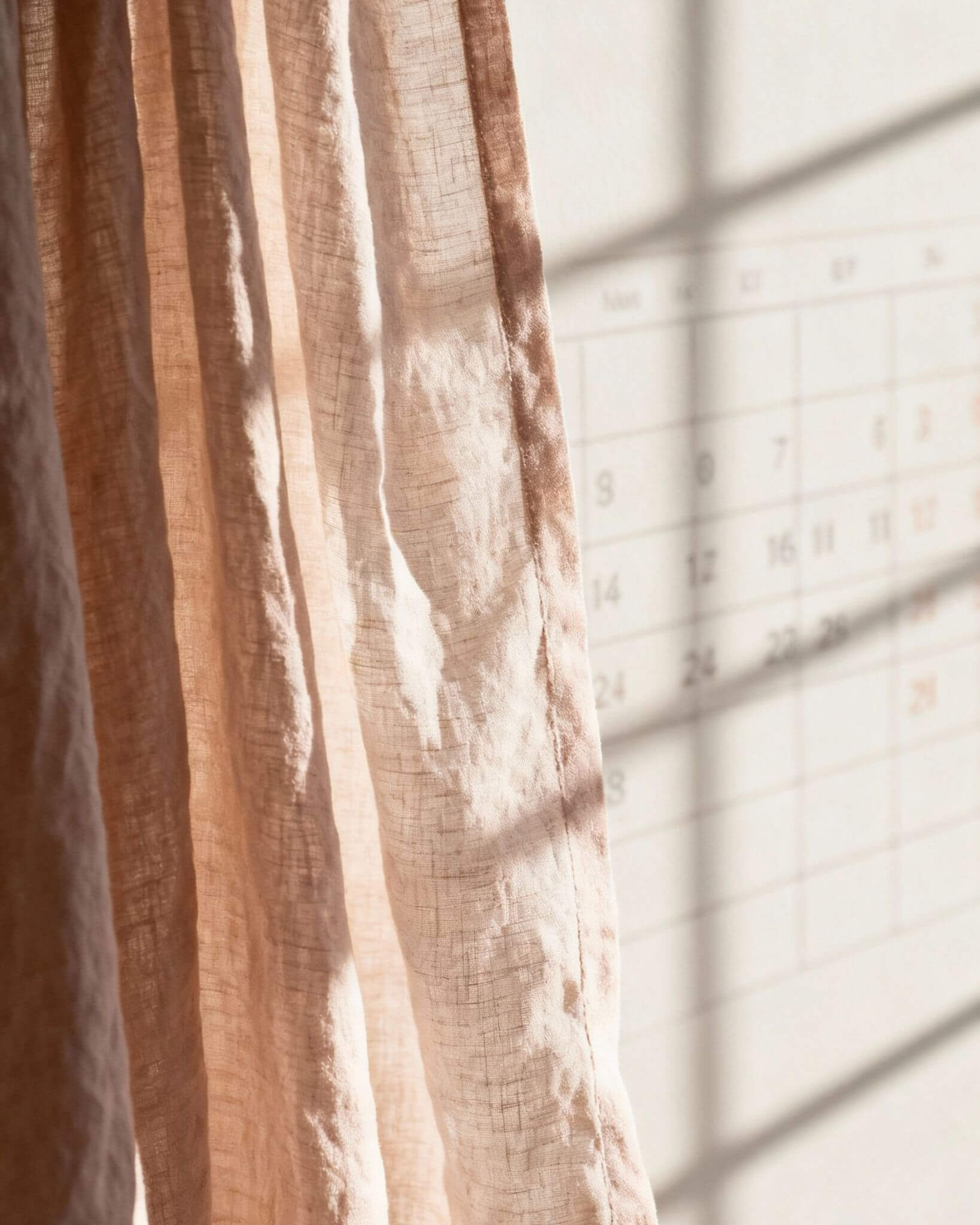
Time, as we use it, is a human invention; an agreed‑upon lattice of time markers that never existed in nature. And yet, this invented structure has become one of the most powerful organizing forces in our emotional, cultural, and economic lives. We move through January to December as if the calendar were a living, real thing; a metronome beneath our days, turning repetition into ritual and structure into meaning. These arbitrary divisions become the places where we store our hopes, our reckonings, our sense of renewal. In choosing to believe in this shared choreography of numbered days, we take something neutral, like a grid of numbers, and fill it with meaning. This Rithihi story is about how to consciously embody new beginnings in this system of our own meaning-making, through what we wear. Because, for the longest time, clothing has been a way of embodying who we are and what we will for; and what better time to use that than when we choose to begin again?

The New New Year
January first was not always a new beginning for us in South Asia. Traditional calendar systems in South Asia were built as lunisolar systems incorporating astronomical events, regional seasons, and natural cycles that tied with the planting of crops and harvest. With the colonial introduction of the Gregorian calendar to the subcontinent in the 1700s and the gradual distancing between people and natural systems through industrialization, January 1st slowly got established in the South Asian psyche as a reset of the year, where we all begin again together. This gradual cultural evolution shows us how ideas like calendar times are our own making of meaning.
The work celebration of January 1st stems from this transition. When January 1st falls on a weekday, like in 2026, it is customary for Sri Lankan businesses to start work with work teams gathered around a ceremonial table, with festive food and the traditional oil lamp lit together. This comparatively new ritual often calls for new or special clothing as an unwritten custom honoured by many. It’s a gesture of alignment, dressing for the fresh intentions that the new year carries with it.
Over the decades, this has become a deeply symbolic act, steeped in the collective understanding that clothing carries meaning beyond the material. What we wear becomes a way in which we articulate hope, respect, and intention.
A month of many beginnings

Pongal, celebrated in January in both Sri Lanka and South India, has maintained a heightened sense of renewal throughout the centuries. Being a festival of abundance, gratitude, and the first harvest of the year, and its coincidental alignment with the now widely used Gregorian calendar, Pongal remains a time for families to wear new clothing. It’s a way to honour the renewal of seasons and to mark the day as separate from the ordinary, as a threshold into which the community collectively steps into a renewed time. Here, new clothing becomes a way to celebrate our lives made possible by the sun, the land, and the cycles that sustain life.
In modern practice, January has absorbed many of these sensibilities, blending the inherited rhythms of South Asia with the cadence of the Gregorian calendar. Yet at its heart, the act is the same: we choose our garments not as objects of excess, but as instruments through which we step into the new year with awareness and purpose. The first Sunday service at church, a visit to a kovil or temple, the personal ritual of leaving home for work in the new year; these are moments in which clothing outlines intention. It signals readiness, frames memory, and communicates our inner orientation to the world.
A resolution to renew where needed

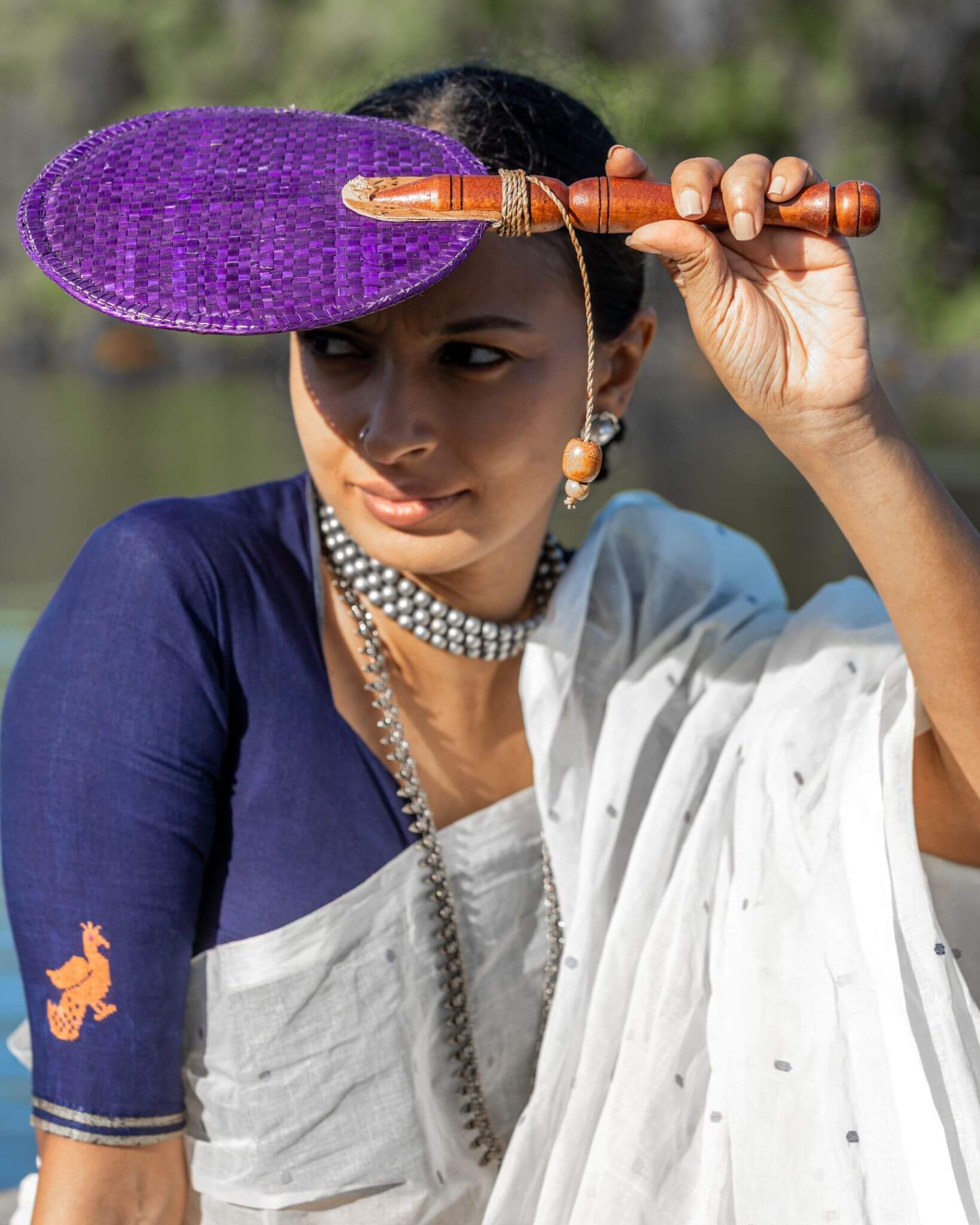
Rithihi approaches this practice of intentional renewal as a moment to assess where and why you need freshness. Renewal is not to acquire more and more. It’s not about a whole new wardrobe or searching for novelty for the sake of it. We see this moment that we’ve collectively agreed as a starting point, as one to think about what new means to you and where you need freshening. It can be one carefully chosen piece of jewelry, a blouse to complement a treasured old sari, a shawl that enriches an existing ensemble, or a small detail that carries meaning for the wearer. Clothing is a way we signal freshness, intention and looking forward; it’s also a way to help ourselves to step into who we wish to be. From birth ceremonies to marriages, temple visits to daily rites of devotion, new clothing has served as a transition marker in South Asian minds for centuries. We’ve used new clothing to embody personal evolution, whether it’s for the opening of a cycle or the deliberate shaping of our social and spiritual selves. It’s a powerful signal to oneself.
And while tradition and social custom may guide our choices, the true meaning lies in the personal alignment, and the way a chosen garment can remind us of how we want to step forward. Just as we framed time to make meaning, we can use clothing to create meaning. This is the significance of clothing in how we approach renewal. It doesn’t require spectacle, only awareness.
As we step into a new year, Rithihi celebrates this sensibility: a conscious approach to beginning again. May the coming days be framed with the beauty of small, deliberate beginnings. From all of us at Rithihi, Happy New Year.

Get in touch with us!
Monday – Saturday | Hours 10:00 am – 06:00 pm
19 Alfred House Garden Colombo 3, Sri Lanka
+94 11 2581 988 (Telephone)
+94762800220 (WhatsApp)


Rashantha
Love the story ❤️