
Stories handpainted by women, stretching their devotional stories along textiles, drawn to drape the living breathing bodies of other women who want to carry those stories. There are few things as beautiful as Madhubani sarees in this world.
Fabric is not mere clothing; it’s canvas for culture, for the pulse of a people’s imagination, and for the stories they want to share and continue into the future. At our Rithihi space in Colombo, we collect and curate textiles as companions of an ongoing conversation on South Asian culture. Handpainted sarees, each crafted by Maithili women—keepers of the storytelling saree tradition for generations. Each a singular piece. Each a devotional painting done by hand.
From the villages of Mithila in Bihar, where women have painted their walls in devotion for centuries, comes a tradition of combining art and sarees to tell stories. These are the treasured storytelling sarees of Madhubani. What began as wall art got painted into handwoven textile yards with story sequences that stretch along their length. They transform the wearer of these sarees into an envoy of a story, a living book of sorts that brings tales into motion.
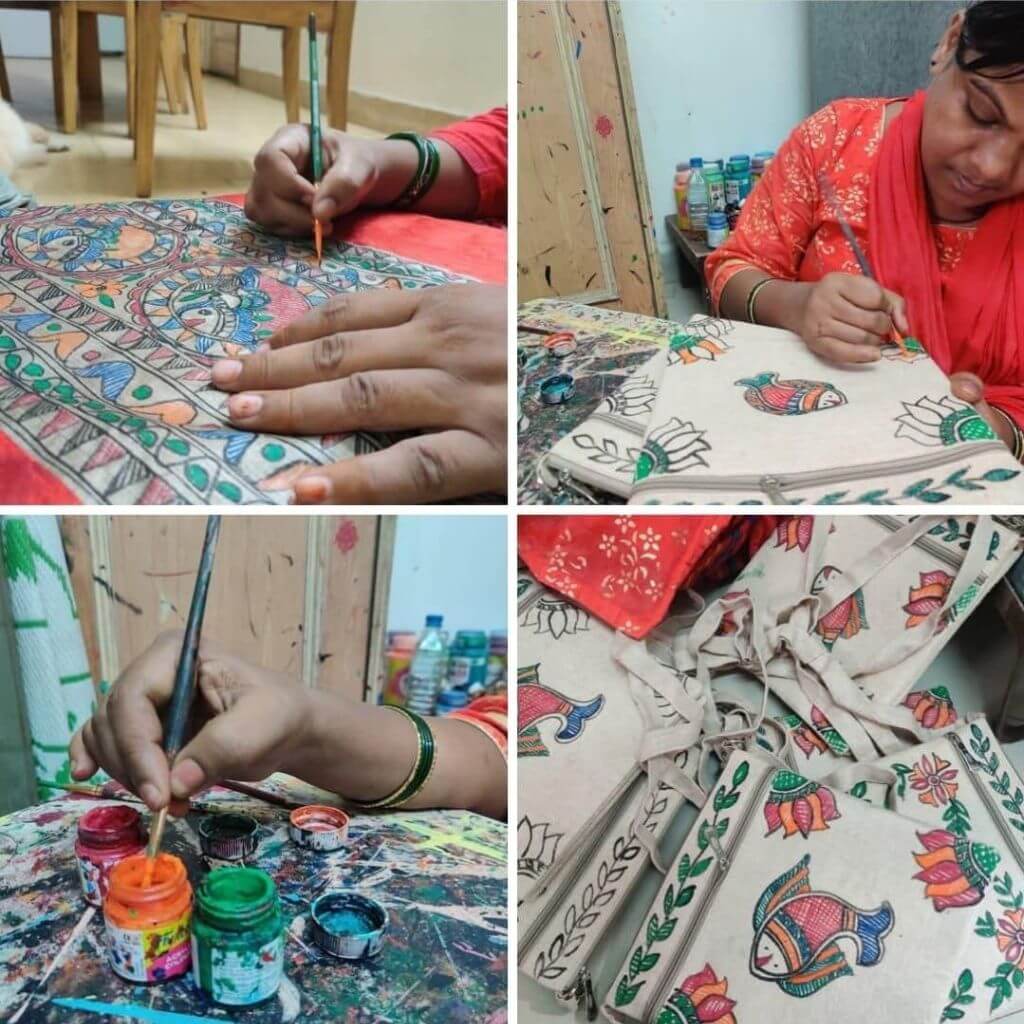
Painted entirely by hands of traditional Maithili women artists, with twigs, fingers, matchsticks, and nib pens, the dyes for Madhubani sarees are drawn from nature. Butterfly pea flowers for blue, bougainvillea petals for pink, flat bean leaves for green, turmeric for yellow, ground rice for white… The entire process is an act of devotion to gods and nature. Because it’s not for fashion or commercial reasons that these artists paint; they paint for devotion, to celebrate the stories of their beliefs, and to ensure their continuity.
Madhubani sarees were born to house the tales that Maithili cultures told to bridge their mythic world with their beautiful surroundings. This is why their stories are those significant to the artists’ faiths and ancestry; of Radha and Krishna beneath the Kadamba tree; Durga in her fierce glory, riding lions and slaying demons; the Tree of Life, branching into fertility, prosperity, and cosmic order. As much as the key imagery, these sarees also speak through their richly symbolic motifs; lotuses for purity, fish for abundance, pairs of entwined parrots for love. Made from stories, these spectacular sarees are also worn at times we honour and congregate in the name of stories old and new; during weddings, festivals, temple visits, and rituals at home.
There are five styles within Madhubani, each with its own temperament, technique, frequented colour palettes and story subject matter. Bharni style, bold and vivid, is a theatre of the gods; unfolding poetic scenes like Krishna playing his flute with Radha blushing nearby or epic sequences of Durga mid-battle. Kachni, is more delicate and restrained, composed of fine linework and monochrome geometry, often portraying sacred flora and deities with meditative precision. Tantrik style is mystical and charged, filled with yantras, mantras, and potent energetic symbols. It is a saree that awakens.The most distinct style is perhaps Godna, raw and tribal, echoing the tattoo traditions of Bihar with animals, trees, geometric shapes rendered in muted tones. Kohbar style, tied to marriage and fertility, derives from the art painted traditionally on the walls of newlyweds’ homes.
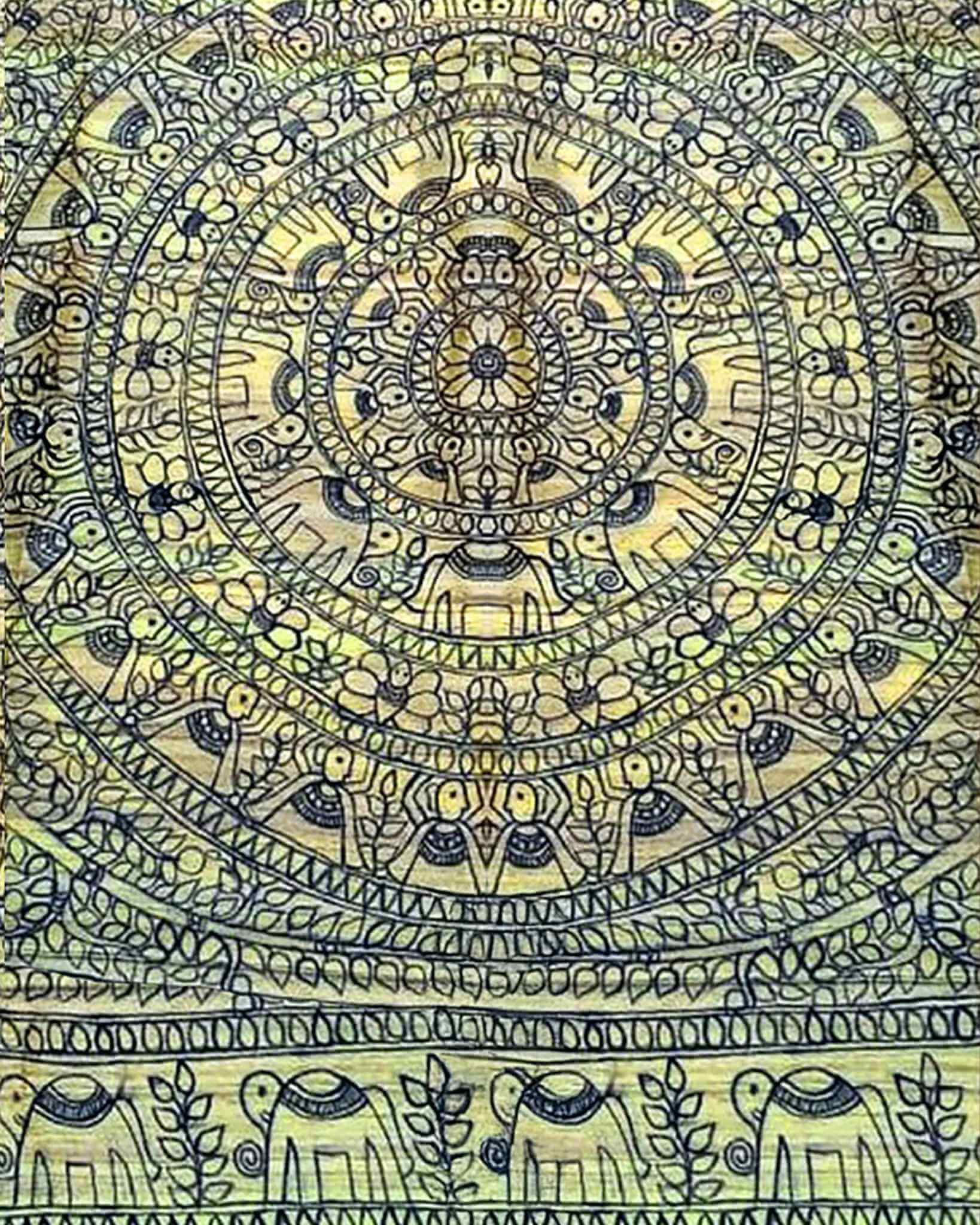
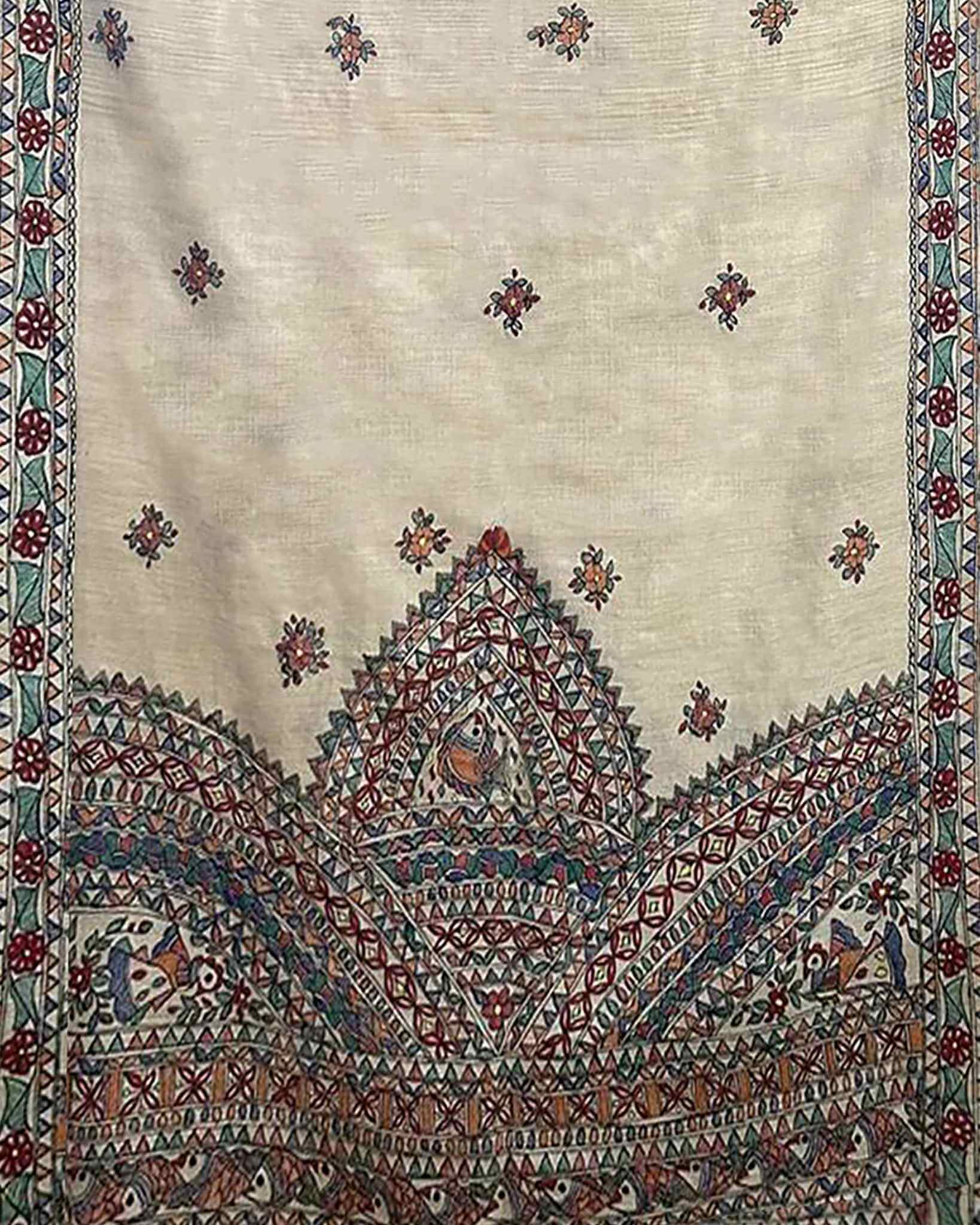
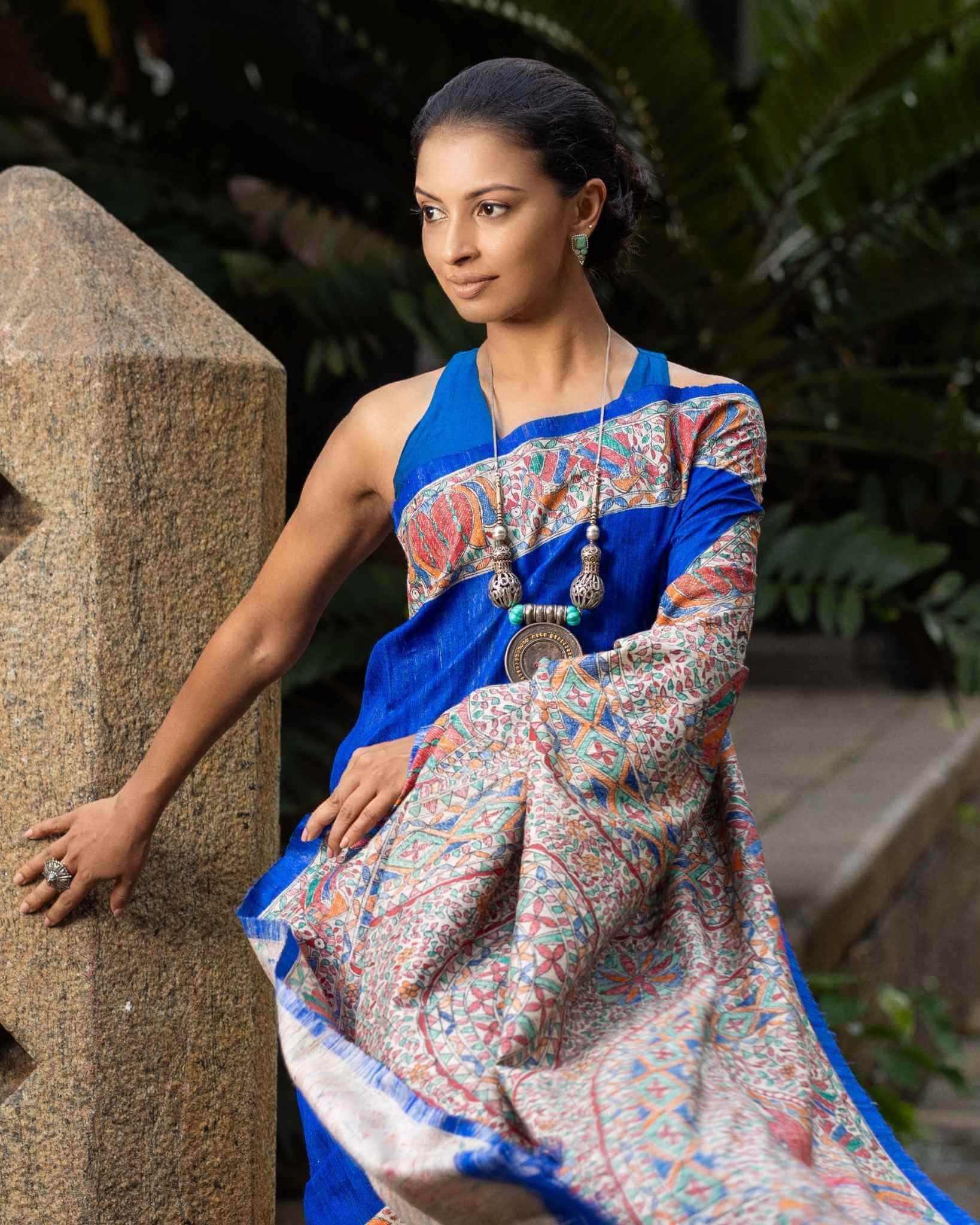
Over time, Madhubani art leapt from the mud walls of Mithila homes to canvases, scrolls, and eventually to sarees that travelled across India and the world. What began as sacred devotion within village courtyards became recognised as one of India’s great heritage arts, earning a Geographical Indication tag to protect its authenticity. Today, Madhubani sarees carry the dual life of sacred object and collectible treasure: worn by brides on their wedding days, draped during temple visits and Diwali rituals, and displayed in galleries as testaments to women’s artistry. Each saree is not only a garment but also an heirloom that holds memory, myth, and artistry within its folds. To wear one is to step into a centuries-long continuum of storytelling, devotion, and creativity. It is also to support the women of Mithila, whose artistry continues to thrive in spite of modern pressures. In this way, every Madhubani saree is at once past and present, prayer and painting, intimate object and cultural archive.
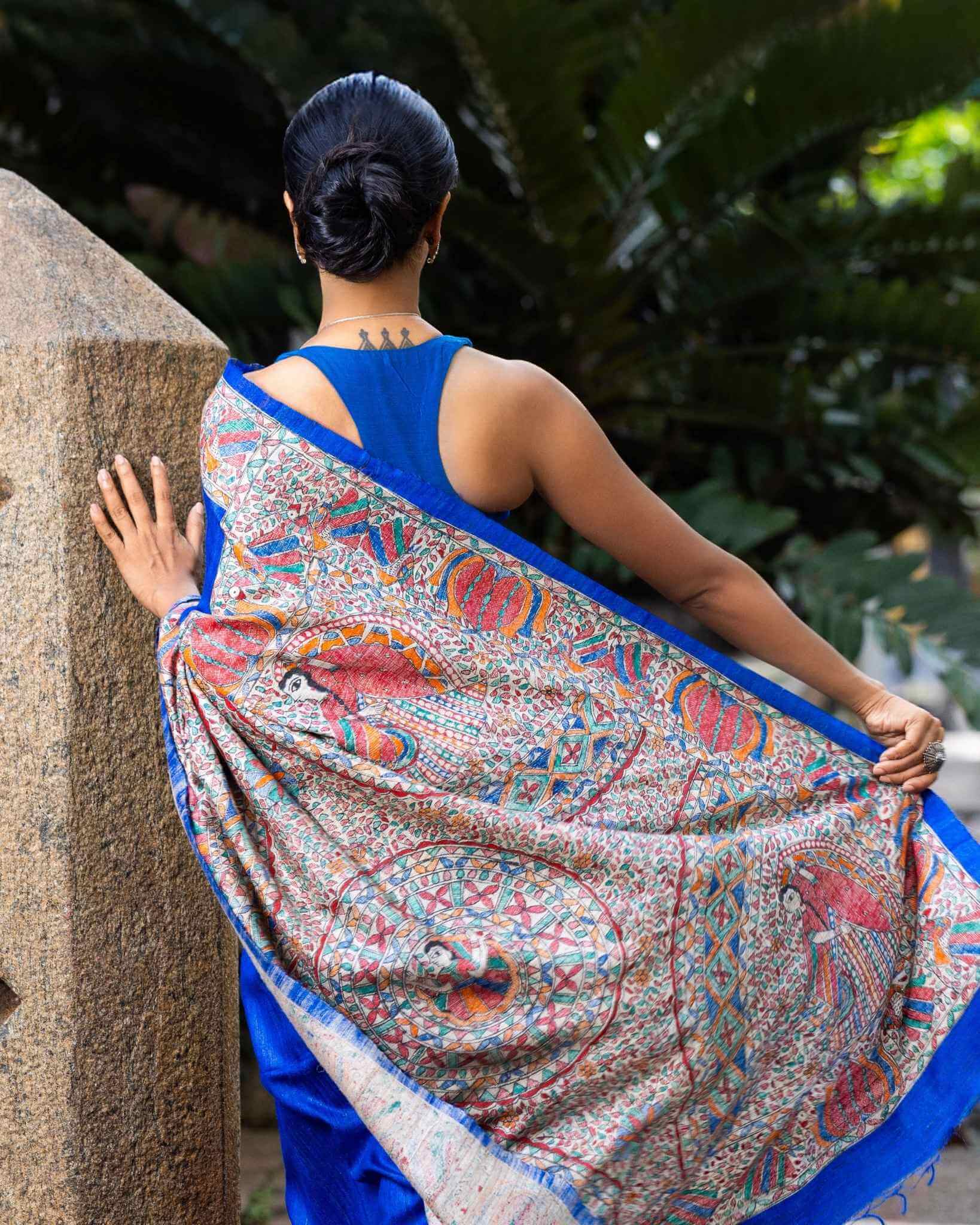
We’ve made space for these incredible textile stories here at Rithihi with a collection that is a mix of traditional Madhibani styles. We listen to their stories, and we invite Rithihi women to listen with us. To trace the lines, to wonder.
Wearing a Madhubani saree is carrying a tale across your shoulder, letting it unfold every time you’re seen. It is a form of almost-mystical friendship between the wearer and the artist—two women who will probably never meet but have come together to share a story.


