

South Asia is known for its exuberance; saturated colours, vibrant rituals, homes thick with family, food packed with flavour and textiles layered with motif and colour. Exuberance certainly dominates the identity of our subcontinent. But there’s a less-talked-about culture of practiced restraint that’s inherent to the region. Across its many faiths, South Asia holds the spiritual practice of fasting as a connecting ritual close to many communities.
Fasting, in South Asian spiritual life, is never just a physical act limited to diets or health fads; it’s always practiced for wisdom deepened through restraint. In Sri Lanka, where we call home, February is often the month when this sensibility becomes most apparent. It becomes a period of inward attunement; a time when simplicity is consciously chosen in Islam, Hinduism, Christianity and Buddhism. It’s a discipline that brings us to close contact with some of the most important lessons in this human experience: what hunger does, why patience rewards, the grace of gratitude and humility, and what it means to be satiated without endlessly answering to chronic dissatisfaction. Through restraint, we learn to listen to our bodies and minds and question what’s truly essential, what’s nice-to-have, and what’s unnecessarily taking up time and resources. This is why, across South Asia, restraint was never seen as denial, despite a culture of unapologetic exuberance; instead, it has long been regarded as a higher refinement: a way of clearing space so that what matters may be felt more fully. This Rithihi story celebrates the beauty of restraint through the viewpoints of some major faiths from the region and how the philosophy applies to our approach to clothing.
Fasting as Spiritual Refinement
Though each spiritual tradition names its fasting rituals differently, the impulse is shared: to turn inwards, return to essentials, to align outer conduct with inner values, and to find a sense of clarity that comes with consuming only what we need.
For many, Ramadan is a time shaped entirely by this intention. From dawn to sunset, food and drink are set aside, but so too are excess, harsh speech, and heedless desire. The fast extends beyond the body into conduct, thought, and moral awareness. Hunger becomes a teacher, a universal language that dissolves distance between self and other.

In Sri Lanka, Ramadan evenings unfold with communal gatherings, heightening its meaning within the context of a spiritual practice that puts us to question what truly matters. This is why the breaking of the fast at iftar is so profoundly grounded in celebrating with gratitude and practicing sadaqah, sharing. In this way, restraint becomes a path to gentleness and ethical clarity.
Hindu traditions, too, place restraint at the heart of devotion. Ekadashi fasts, observed twice each lunar month, are undertaken to quiet the senses and steady consciousness. Maha Shivaratri in February, marked by fasting and night-long meditation while remaining upright, frames restraint as spiritual awakening; it’s a shedding of the illusory chase to feel and enjoy more and more, in pursuit of inner clarity. Here, desire is not rejected, but disciplined, transformed into devotion to a higher self symbolized by Shiva consciousness.
Christian communities in Sri Lanka enter Lent in February with a similar purpose. Through fasting, abstinence, and prayer, the season invites believers to examine attachment and reflect on how our greatest challenges become the beginning of our most defining renewals.


Buddhist practice offers a parallel sensibility. On full moon Poya days, including February’s Navam, many lay devotees observe the Eight Precepts, abstaining from full meals after noon, which is considered excessive. By limiting unnecessary consumption, the mind becomes more visible to itself. In that visibility, arises mindfulness, compassion, and moral steadiness.
Across these traditions, restraint reveals a shared human wisdom. It’s purification from excess and greed, heightened awareness, a sharpening of attention and conscience. And it also brings empathy to the reality of hunger, which is not a choice for many. When we pause consumption, we understand others’ vulnerability and notice our dependence. Choosing less often leads us to recognize what’s enough. South Asian cultures have long maintained their fasting rituals, keeping this cultural wisdom intact. Knowing that beauty often resides in balance and care rather than accumulation.
The Shared Human Language of Restraint
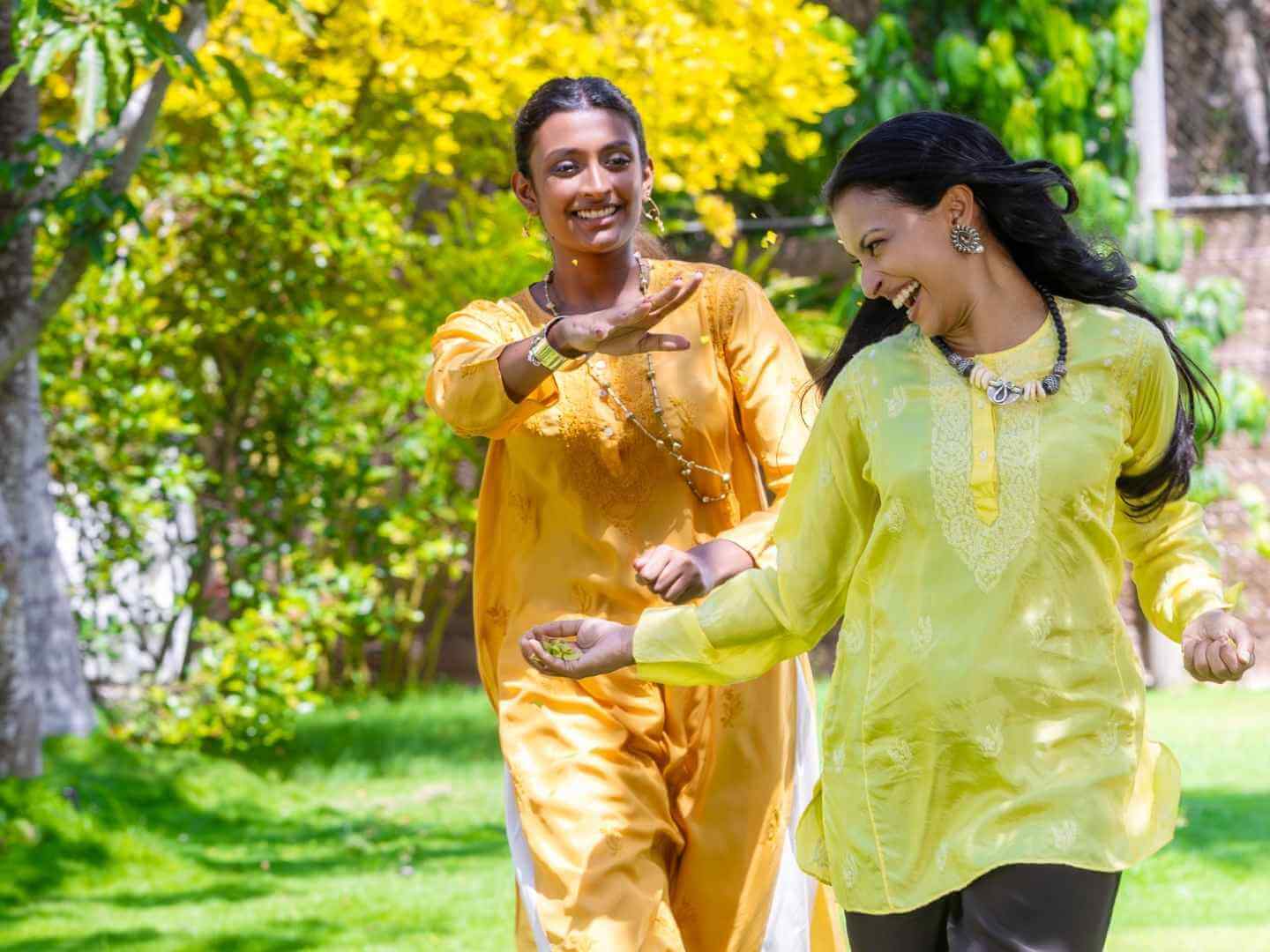
Clothing, like fasting, remains a visible language of restraint among South Asians. In a regional culture that is unafraid of bright colours and ornamentation, clothing has become even more of a potent way to bring clarity to the outer self, to evoke the same resonance in our inner world. Across South Asian spiritual practices, what one wears during periods of discipline is rarely elaborate. Buddhist sil observances on Poya days call for plain white clothing, free of ornamentation, so attention may turn inward without distraction. During Maha Shivaratri, devotees choose garments that are clean and comfortable, supporting hygiene and health through the long hours of fasting and vigil. Ramadan invites modest, loose-fitting clothing that honours humility and ease, breathable cottons and linens that allow the body to endure the fast with gentleness. During Lent, our Christians move toward subdued, simpler attire, mirroring a season of penitence and reflection on sacrifice rather than outward expression.
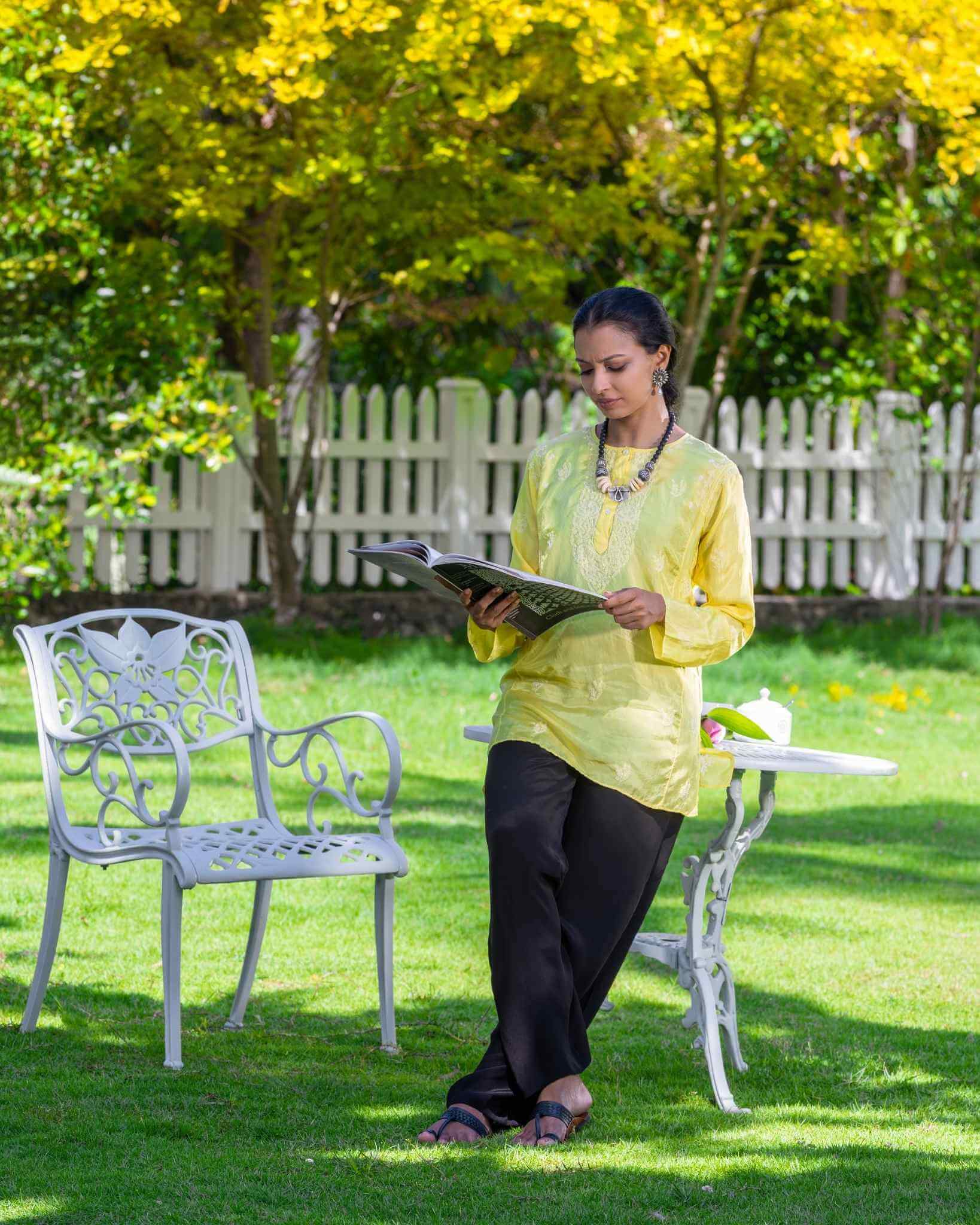
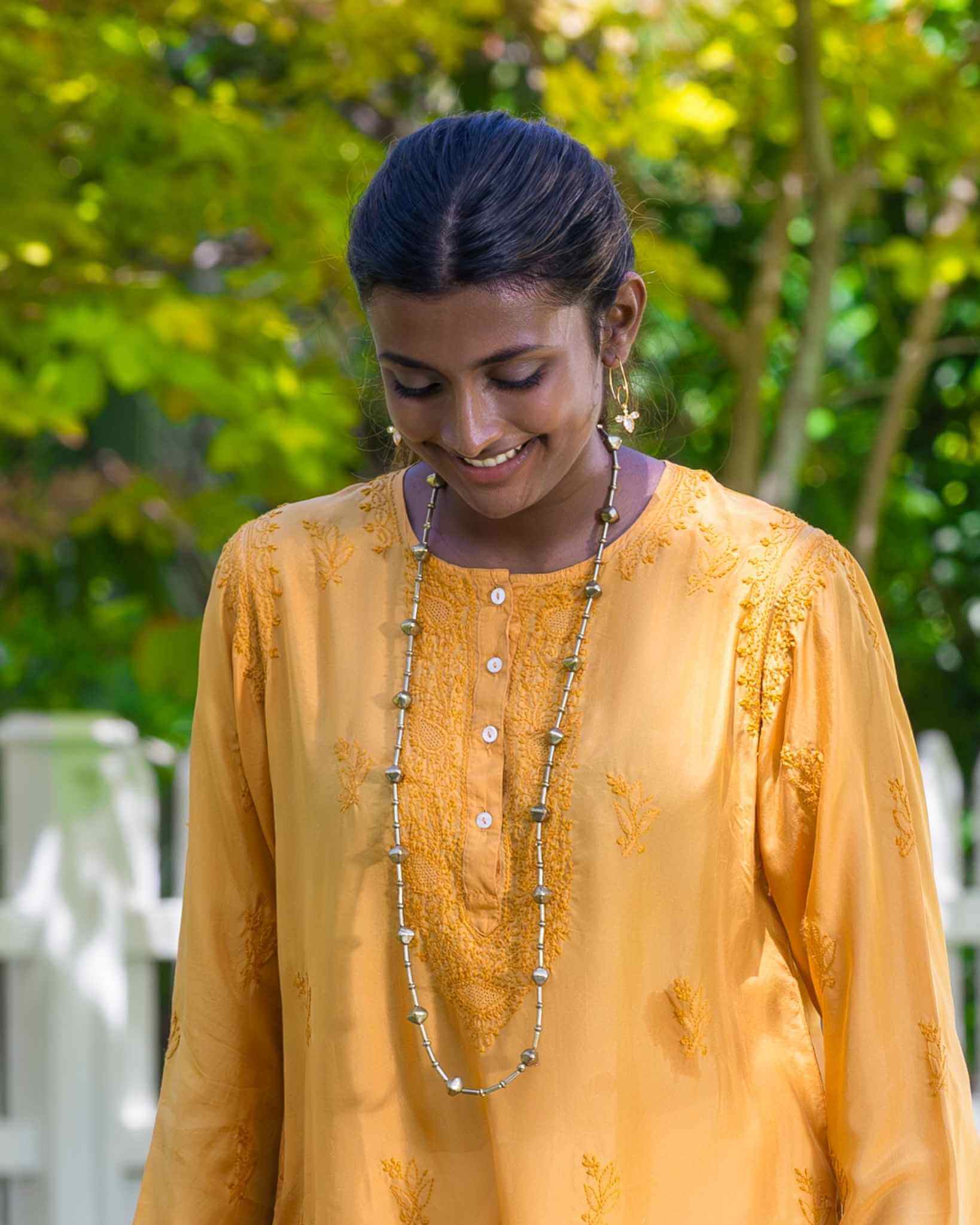
What unites these practices is not uniformity, but intention. In each, clothing is pared back so that it does not compete with the inner work being done. Fabric becomes supportive rather than performative.
The wisdom here extends far beyond religious observance. In moments when life feels crowded by noise, consumption, urgency, or the constant call to want more, we may seek clarity not only through fasting from food but also by eliminating excess in other forms. Clothing, so close to the body and psyche, is a natural choice for this. Choosing fewer garments, choosing them well, allowing space between purchases, and favouring what feels grounding rather than stimulating can help relocate our centre. Restraint is a beautiful form of care.
At Rithihi, we have observed that beauty gains depth when it’s carefully considered. This is why garments made with care, chosen thoughtfully, and worn with intention bring a sense of personal clarity. The beauty of restraint shows us how simplicity is never emptiness but fullness without excess; a respect for craftsmanship, lineage, and proportion; a refusal to confuse abundance with accumulation.
By celebrating our region’s deep-rooted reverence for simplicity, we wanted to remind you how restraint refines life. It teaches us how to choose, how to pause, and honour what is essential. This is a lesson we hold close and one you’ll find reflected in Rithihi’s careful curation.
Get in touch with us!
Monday – Saturday | Hours 10:00 am – 06:00 pm
19 Alfred House Garden Colombo 3, Sri Lanka
+94 11 2581 988 (Telephone)
+94762800220 (WhatsApp)


